REVIEW · LOS ANGELES
Guided Whale Watching Tour from Long Beach
Book on Viator →Operated by Harbor Breeze Cruises · Bookable on Viator
Whales off Long Beach feel close. This guided cruise with Harbor Breeze Cruises pairs captain narration with Aquarium of the Pacific educators, then takes you out over the open Pacific for whales, dolphins, sea lions, and even rare marine birds, with a pass by the iconic Queen Mary on the way out and back. I love the mix of marine spotting plus on-board learning, and I also like the Sealife Guarantee safety net: if you see no sealife at all, you get a free voucher for a future trip. The main catch is weather: it can get cold and windy, so you’ll want layers and a plan for choppy water.
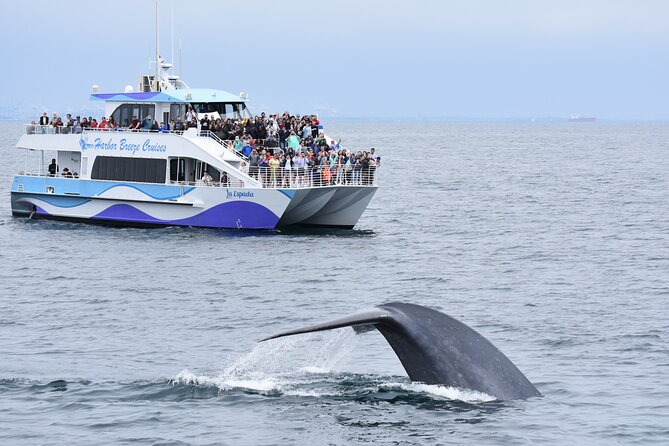
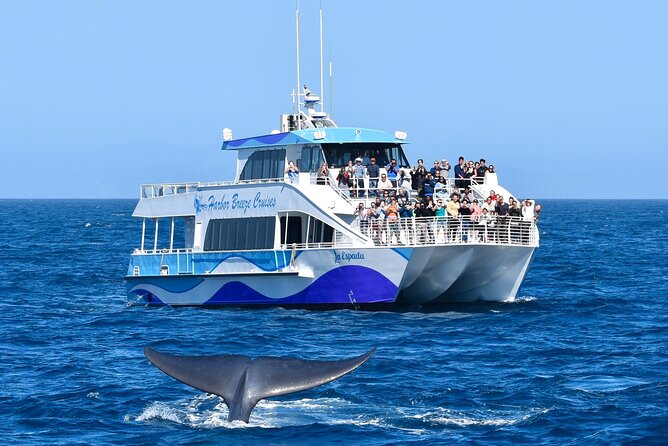
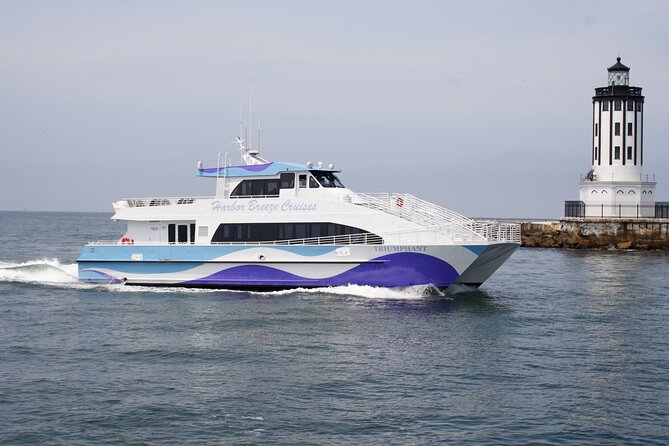
The boat itself is built for this work. You get a custom whale-watching catamaran designed for stability and comfort, with climate-controlled inside seating and big windows, plus outside space for the best views. You also have onboard restrooms, and the tour is run with low-emission engines meant to reduce disturbance to whales and their environment.
Finally, the day is more than just ocean time. You’ll also stop around Long Beach’s waterfront landmarks, including the Aquarium of the Pacific and the area tied to the Spruce Goose, plus you’ll pass through the working cruise ship/harbor zone with a look at major breakwaters. It’s a group trip capped at 120 people, and it’s usually booked ahead (around 11 days), so I recommend locking in your date early—especially if you’re traveling as a family.
In This Review
- Quick hits before you go
- Dock #2 check-in: how the day starts in Long Beach
- The catamaran and the search: what happens on the open Pacific
- Queen Mary passes: a waterfront warm-up before the whales
- What the Aquarium of the Pacific educators do on board
- The land stops: Aquarium of the Pacific, Spruce Goose area, and the port
- Aquarium of the Pacific stop: 11,000 animals on shore
- Cruise Ship Terminal area and the Spruce Goose connection
- Largest commercial port zone and breakwater views
- Wildlife odds: dolphins, sea lions, and the whales you might spot
- Price and value: is $35 a smart deal?
- Comfort, cold, and sea-sickness tips that actually help
- How far ahead should you book?
- Who should book this guided whale watching from Long Beach?
- Should you book this guided whale watching tour from Long Beach?
- FAQ
- How long is the guided whale watching cruise?
- What wildlife can you look for on this tour?
- Is wildlife guaranteed?
- What’s included in the price?
- Are food and drinks included?
- Where do you meet and how does the tour end?
- Is parking available?
- What’s the cancellation policy?
Quick hits before you go
- Easy start at Dock #2 in Long Beach near the Aquarium area, so you’re not hunting around when you’re ready to board.
- On-board educators from the Aquarium of the Pacific who help you connect what you see with what it means.
- Low-emission engines plus stable catamaran design for a more comfortable, whale-friendly outing.
- Queen Mary sightings from the water as you leave and return, with photo-ready waterfront views.
- Wildlife odds you can feel good about thanks to the Sealife Guarantee voucher if nothing is spotted.
Dock #2 check-in: how the day starts in Long Beach
Your starting point is Harbor Breeze Whale Watching Cruises at 100 Aquarium Way, Dock #2, Long Beach. It’s in the same general neighborhood as the Aquarium of the Pacific, so your day has a natural flow: you’re close to the action before you ever step onto the water. If you’re arriving by transit, it’s also listed as being near public transportation, which helps if you don’t want a parking headache.
Parking isn’t included, but you do get validation for discount parking in a structure across the street. That matters because $35 whale-watching tours add up fast once you include parking and snacks, so even a small discount helps the math. If you’re driving, I’d plan to be early enough to grab the ticket process without rushing, especially since the boat can fill and you’ll want to choose your viewing spot.
Group size is capped at 120 travelers, and that’s a real factor. On a smaller boat, you feel each sighting more. On a big crowd, you can spend the whole trip searching for a clear view. Here, the cap helps keep it social but not chaotic, and the catamaran layout gives you multiple angles.
You can also read our reviews of more guided tours in Los Angeles



The catamaran and the search: what happens on the open Pacific
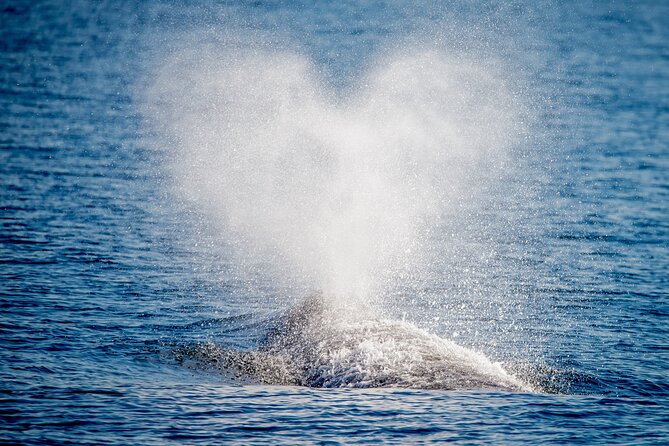
Once you’re underway, the tour’s core mission is simple: travel out into the open Pacific Ocean to search for marine life. That’s where your luck (and timing) comes into play. The tour focuses on sightings like whales, dolphins, sea lions, and rare marine birds, and the captain is actively watching and scanning as you go.
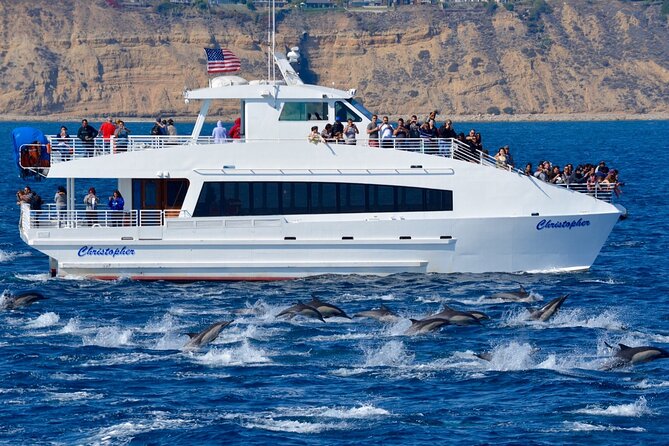
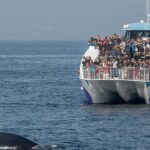
Here’s why I think the boat choice is a big deal. The vessel is described as custom built and designed for stability and comfort, and whale watching is exactly the kind of trip where stability reduces the stress. Reviews echo that the ride feels comfortable, with plenty of room to sit or stand depending on where you want the best sightline.
You’ll also have options for seating:
- Inside seating with climate control and large windows
- Outside seating for direct ocean views and fresh air
That setup is practical. If it’s windy or cold, you can hop inside. If the captain slows down to check a sighting, you can move outside quickly without missing the moment. Plus, onboard restrooms mean you’re not stuck during longer stretches where you just wait for the next puff of a whale spout.
One more environmental detail that I actually appreciate: the tour highlights low-emission engines, with the goal of not harming or disturbing whales. You can’t control nature, but you can control how you approach it, and this is clearly part of their whale-watching approach.
Queen Mary passes: a waterfront warm-up before the whales
You’ll see the Queen Mary while departing and again when the boat returns. This is a fun warm-up for two reasons. First, it’s a landmark that instantly makes the location feel real. Second, it gives you something to enjoy even while you’re still waiting for the open-water scan to pay off.
Also, Long Beach’s coastline looks different from the water. Even if you’ve been to the Queen Mary in person, viewing it from the harbor side gives you a clearer sense of where you are heading next: out past the working harbor and out toward the open Pacific.
This part of the trip is also useful psychologically. You’re not just stuck in anticipation. You’re already sightseeing, already on a schedule, and already moving.
What the Aquarium of the Pacific educators do on board
One of the strongest parts of this experience is the education layer. The tour includes expert educators from the Aquarium of the Pacific, and you’ll also hear your captain’s commentary on what you’re passing and what you might be looking at.
In plain terms, this improves your odds of having fun even if sightings are slow. Whale watching can feel frustrating if you don’t know what you’re scanning for. When you have people helping you interpret behavior—like where dolphins tend to show up or how sea lions use the water—you spend less time guessing and more time tracking.
The educators and crew are also described as specializing in whale watching with 30+ years of experience. That matters because the best whale watch isn’t just about being out there. It’s about responding quickly when something changes, slowing down when it makes sense, and keeping riders informed.
If you’re a first-timer, this support is especially valuable. I’d expect you to come away seeing more than just flashes of fins—you’ll understand why those flashes happen and what the animals might be doing.
Some specific guide mentions show up in recent experiences, including praise for a guide named Zack for being friendly and ready to answer questions. Even if you don’t catch that particular guide, the key idea stays the same: you’re not left alone with your binoculars.
The land stops: Aquarium of the Pacific, Spruce Goose area, and the port
Not every whale-watching experience gives you shore context. Here, the day includes several stops that help you connect the sea life with the Long Beach setting.
You can also read our reviews of more whale watching tours in Los Angeles
Aquarium of the Pacific stop: 11,000 animals on shore
One stop centers on the Aquarium of the Pacific, described as having over 11,000 animals and over 500 different species, plus animal encounters. Even for people who think they’re there only for whales, this stop can be the emotional anchor of the day.
Why? It’s the place where you can feel confident about animal spotting before you even get onto the water. You’ll likely see how different marine species behave in a controlled environment, then you can watch for similar patterns out at sea.
Also, it breaks up the day. If the ocean winds push you inside for long stretches, having a solid shore stop is a nice balance.
Cruise Ship Terminal area and the Spruce Goose connection
You’ll also pass through the cruise ship terminal area and see the site connected to the Spruce Goose—Howard Hughes’ massive wooden flying boat built during World War II. This is one of those Long Beach details that gives the waterfront more personality than just ships and docks.
It’s not just trivia. It helps you feel the port as a working, industrial place with a story. That story makes the whole setting more memorable, and it gives kids and adults something to talk about beyond the wildlife.
Largest commercial port zone and breakwater views
The itinerary also references the port as part of the largest commercial port in the world, plus mention of one of the USA’s largest breakwaters. Even without technical explanations, you’ll feel this when you’re near the water: the harbor structure shapes wind, waves, and what you can see.
That’s another reason this tour feels like a full experience. You’re not only chasing whales; you’re also learning how the coastline and harbor design set the stage for what the animals do.
Wildlife odds: dolphins, sea lions, and the whales you might spot
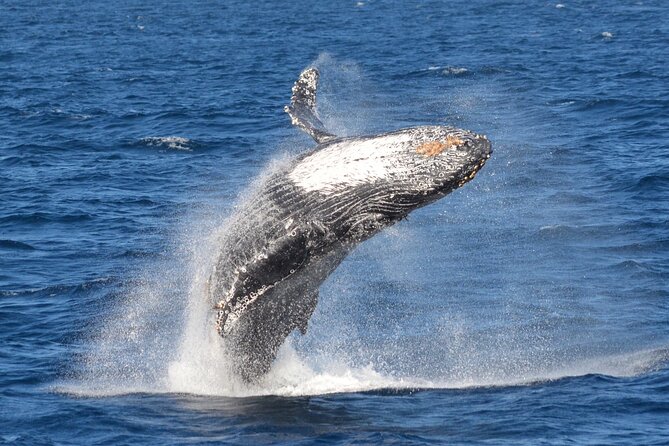
Wildlife sightings are never guaranteed, and this tour is clear about that. But the pattern of what people often spot here is consistent: dolphins and sea lions show up frequently, and whales can show up in multiple forms depending on the season and conditions.
From what you’re set up to look for, you might see:
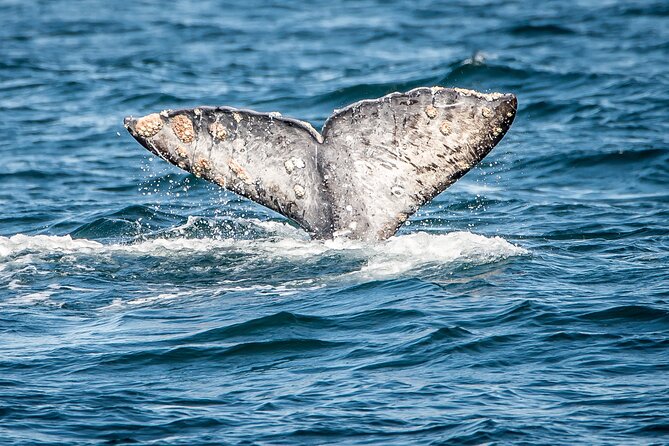
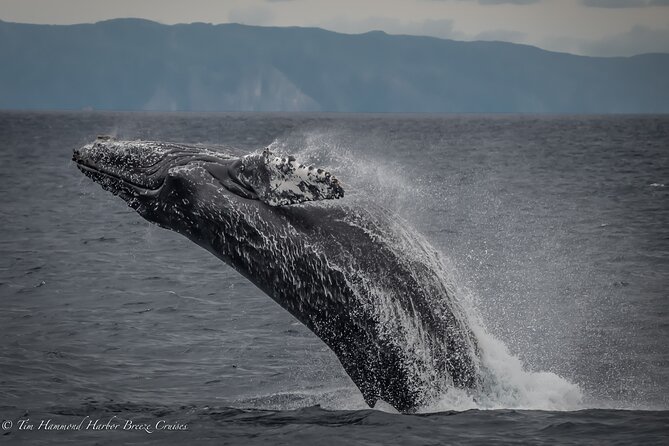
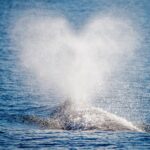
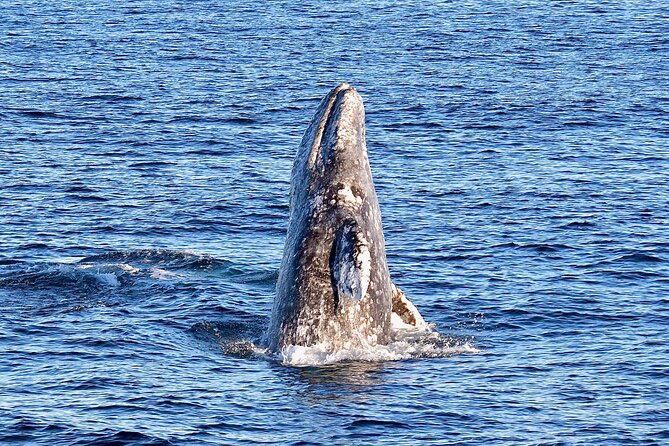
- Whales (including species like gray, fin, and humpback based on recent sightings)
- Dolphins, often in large pods
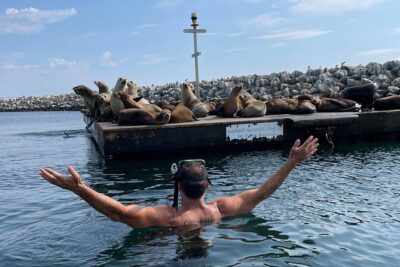
- Sea lions popping up near the water surface
- Marine birds, including rare sightings
A few standout recent experiences include trips where people saw several whales in one outing and others where dolphins were so numerous the boat seemed surrounded. That kind of dolphin activity is common enough that it’s worth planning for: dolphins often guide you to where feeding activity is happening.
One practical tip I’d give you: get comfortable watching for small surface clues first. Whales don’t always announce themselves with constant action. Sometimes you get a quick spout, a slow roll, or a momentary change in the water before the next event. Having a crew scanning for you helps, but your job is simply to stay ready.
And if your weather window is rough, that doesn’t automatically mean a no-show. The captain and crew are set up to search and respond, and you may still get dolphins even when whale spotting takes longer.
Price and value: is $35 a smart deal?
At $35 per person, this is a value-minded outing if you compare it to other coastal whale watch options. The price isn’t only for time on the water. You’re paying for:
- A 2 to 2.5 hour cruise
- On-board Aquarium educators
- Captains and crew specializing in whale watching (30+ years)
- A stable catamaran with indoor climate control
- Multiple restrooms onboard
- A Sealife Guarantee voucher if you see no sealife
That last point is the big value lever. Whale watching is a gamble by nature, but it’s less stressful when there’s a fallback plan. I still wouldn’t treat any guarantee as a promise of whales, but as a risk-reducer, it’s meaningful.
Also, snacks and drinks are not included, but they are available onboard. That’s not a drawback for me; it’s just a budgeting reality. If you want to keep costs down, bring a plan for water and consider that the onboard snack prices can be higher than you’d expect.
Comfort, cold, and sea-sickness tips that actually help
This tour can be cold, especially on the open water. Recent experiences mention cold wind, and some people also note the potential to get sea sick easily. So don’t treat that like a rumor—treat it like a checklist item.
Bring:
- A warm layer you can wear in wind
- Gloves or something hand-warm if you’re sensitive
- Motion-sickness support if you need it (like medication you’ve used before)
If waves are choppy, you’ll still likely be okay on the catamaran, but comfort is personal. Choose where you sit based on your tolerance:
- If you’re prone to motion discomfort, start inside and move outside only when you need it.
- If you want maximum view and don’t mind the weather, outside seating can be more rewarding when the boat slows for sightings.
One more practical note: the microphone sound can be an issue on some days. If you really rely on the narration, consider wearing ear protection or keeping your attention on the guide’s gestures and the crew’s pointing.
At the end, some people mention fast-moving debarkation energy. When you’re excited, it’s easy for people to get in each other’s way. I’d keep your pace steady and be mindful as the crowd funnels off the boat.
How far ahead should you book?
This is one of those tours that works best when you choose your timing and keep your options open for weather. It’s commonly booked about 11 days in advance, and the group size max is 120, so you’ll likely have smoother access if you reserve earlier rather than later.
If you’re flexible on date but not on season, pick a day when weather looks reasonable. The tour requires good weather, and if it’s canceled due to poor conditions, you’ll be offered a different date or a full refund. In other words, don’t panic if one date doesn’t work—just use the weather as your guide.
Who should book this guided whale watching from Long Beach?
Book it if:
- You want a whale watch with real interpretation, not just staring at the water
- You’re traveling with kids or teens who need a mix of ocean + land stops
- You like the idea of a comfortable catamaran with indoor climate control
- You want the Queen Mary in your day’s photos
Skip it (or choose carefully) if:
- You’re extremely sensitive to cold wind and motion and you can’t adjust with layers or medication
- You’re expecting a guaranteed whale moment every time
- You hate crowded boardings and prefer slow, calm pacing
This tour works well as a family day because it includes both time on the water and structured stops on land, including the Aquarium of the Pacific.
If you’re going solo, it can be a nice way to get a focused experience without needing to coordinate rides, because the meeting point is clear and the tour keeps moving with the captain’s plan.
Should you book this guided whale watching tour from Long Beach?
If your goal is a well-supported whale-watching outing with good teaching, strong viewing options, and a backup plan if sightings don’t happen, I think this is an easy yes. The mix of open Pacific time, a boat built for comfort, and the Aquarium of the Pacific stop makes the day feel full even when wildlife sightings are slow.
That said, go in with the right expectations. Whale watching is still a gamble. Your best strategy is simple: dress for cold, stay patient during scanning time, and be ready to move to the right seating area when the crew calls something out.
I’d book it if you can handle cool ocean air and you want a single, efficient day that connects whales, dolphins, and Long Beach waterfront landmarks.
FAQ
How long is the guided whale watching cruise?
The whale watching cruise runs about 2 to 2.5 hours.
What wildlife can you look for on this tour?
The tour focuses on spotting whales, dolphins, sea lions, and rare marine birds.
Is wildlife guaranteed?
No. Sealife sightings are not guaranteed, but there is a Sealife Guarantee: if no sealife is seen, you’ll receive a free voucher to join a future trip.
What’s included in the price?
Included are the cruise time, on-board Aquarium of the Pacific educators, restrooms onboard, the catamaran seating options, and whale-watching-focused captains/crew. The Sealife Guarantee voucher is also included if applicable.
Are food and drinks included?
No. Food and drink are not included, but you can purchase them onboard.
Where do you meet and how does the tour end?
You start and end at Harbor Breeze Whale Watching Cruises, 100 Aquarium Way Dock #2, Long Beach, CA 90802.
Is parking available?
Parking isn’t included, but you can get validation for a discounted rate in a parking structure across the street.
What’s the cancellation policy?
You can cancel for a full refund if you cancel at least 24 hours before the experience start time. If you cancel less than 24 hours before, the amount paid isn’t refunded. The tour also requires good weather, and cancellations due to poor weather may offer a different date or a full refund.