REVIEW · LOS ANGELES
Old and New Downtown Los Angeles Walking Tour
Book on Viator →Operated by LA Walking Tours · Bookable on Viator
DTLA feels like a time machine. This Old and New Downtown Los Angeles walking tour strings together LA’s golden-era landmarks with today’s street-level energy in just about two hours. You’ll walk as your guide ties the buildings to the people who used them, then end in the heart of downtown near Pershing Square.
What I like most is the mix of big-name classics and practical orientation. You’ll stop at Grand Central Market (historic since 1917) and the Bradbury Building, including time to see the famous interior, which makes the architecture feel real instead of distant. Second: the pace works. The tour is built for a small group, and the guide (often mentioned by name as Phil in feedback) keeps things relaxed enough that you can ask questions and get answers.
The main thing to plan for: not every stop is admission-included. The Historic Theater District and Clifton’s Republic list admission as not included, and the tour requires good weather—so wear shoes you can walk in and don’t plan to do it rain-or-shine.
In This Review
- Key highlights that make this DTLA walk worth it
- A 2-hour DTLA orientation that actually helps you plan
- Starting at 349 S Hill St: quick setup, then straight into DTLA’s layers
- Grand Central Market: history since 1917, right where locals still show up
- Historic Theater District: pre-WWII glamour with a ticket note
- Bradbury Building: the classic interior you can actually see
- Old Bank District and Spring Street of the West: architecture tied to money
- Artistic bookstore stop: a small detour with big “LA personality”
- Jewelry District and Spring Arcade: from display windows to tucked-away dining
- Clifton’s Republic: iconic cafeteria energy, with admission not included
- The Biltmore Los Angeles: grand hotel finale before the central square
- Pershing Square ending: a convenient reset for your next move
- Price and value: what $38 buys in real DTLA time
- Logistics that matter on the ground: mobile ticket, weather, and comfortable pace
- Who should book this Old and New Downtown Los Angeles walking tour
- Should you book this tour?
- FAQ
- How long is the Old and New Downtown Los Angeles Walking Tour?
- How much does the tour cost?
- Where does the tour start and end?
- What time does the tour meet?
- What’s included for admissions at the stops?
- Is this tour limited to a small group?
- Does the tour run in bad weather?
- Can I cancel and get a refund?
Key highlights that make this DTLA walk worth it
- Bradbury Building interior time for a proper look, not just a photo from the sidewalk
- Grand Central Market since 1917 to ground the tour in how downtown actually eats and shops
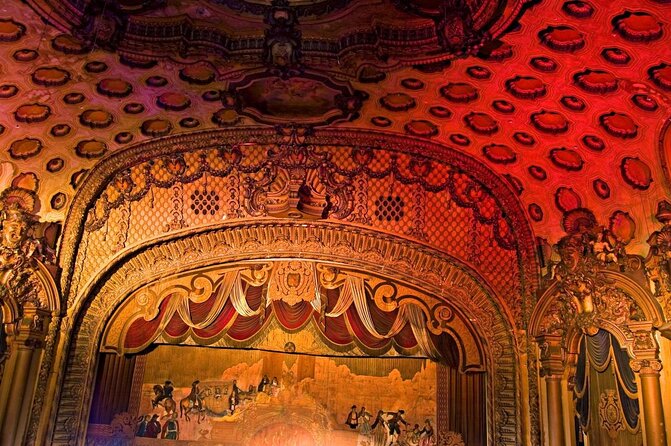
- Historic Theater District with a rare focus on pre-WWII venues
- Old Bank District stops including Spring Street of the West style architecture
- Jewelry District to Spring Arcade for a change of scenery from offices and storefronts to food and boutiques
- A finish at Pershing Square so you’re close to more downtown options right after the walk
A 2-hour DTLA orientation that actually helps you plan
This is the kind of downtown walking tour that makes the rest of your trip easier. LA’s core can feel like a patchwork—blocks that look brand-new next to buildings that remember older streets, older money, and older ambitions. This tour helps you connect those dots without turning it into a history lecture.
The basic rhythm is simple: you meet at 349 S Hill St, walk through a series of landmark areas, and wrap at 532 S Olive St near Pershing Square. With the schedule built around short stop times (often 10 minutes, with a couple longer ones), you get a wide sweep of downtown without exhausting yourself.
Also, this is a small-group setup with a maximum of 20 travelers. In the best cases, it can feel even smaller—people describe it as easy and comfortable—so you’re not stuck shouting over a crowd. If you like asking questions, this format makes that doable.
You can also read our reviews of more walking tours in Los Angeles


Starting at 349 S Hill St: quick setup, then straight into DTLA’s layers
You start at 349 S Hill St, right in the downtown grid where the blocks feel tight and the buildings talk to each other. The tour runs at 1:30 pm. That afternoon timing can be convenient if you want to avoid a super early start, and it gives you daylight for reading architecture details.
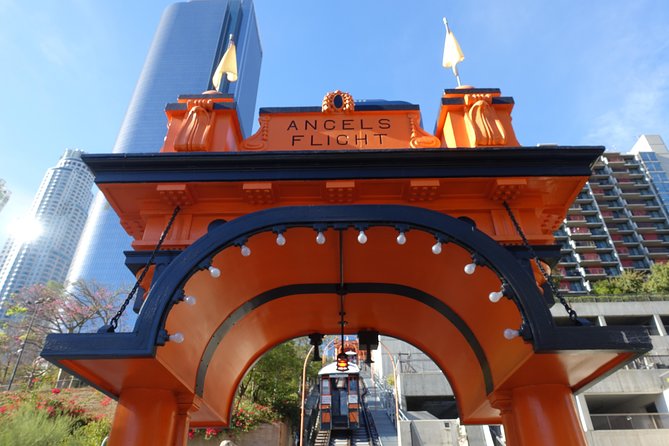
There’s also a quick stop early on for the Shortest Railway in the World. The schedule doesn’t list extra admission details for that point, so treat it like a short, fun way to jump into the theme: old-and-new downtown in miniature.
Practical tip: because it’s a walking tour, you’ll feel every block. Wear shoes that are comfortable for pavement and plan for standing in places with limited seating.
Grand Central Market: history since 1917, right where locals still show up
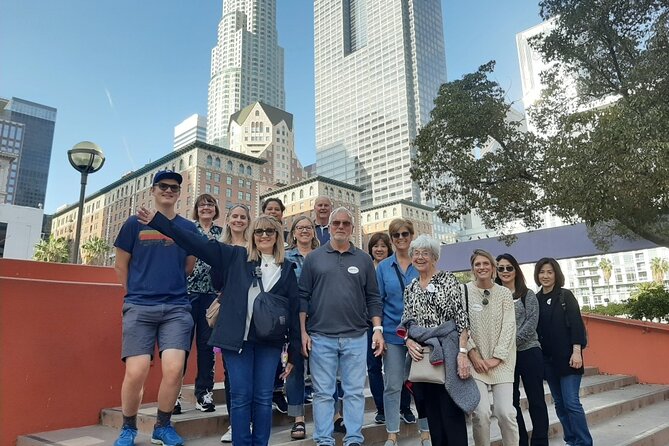
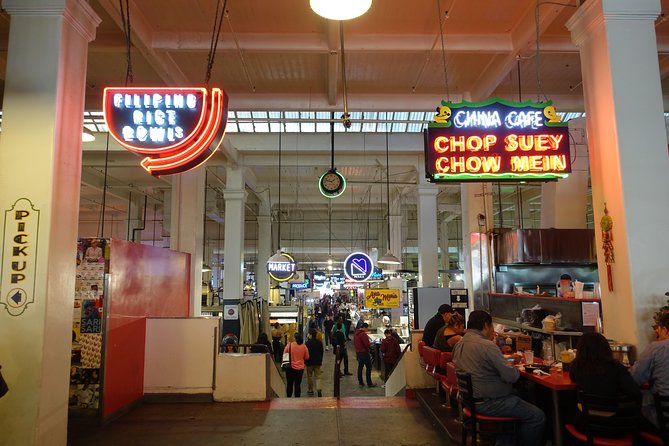
Stop by stop, the tour keeps landing on places you can understand fast. Grand Central Market is the first big anchor. It’s a historic market dating to 1917, and it’s the kind of location that makes downtown feel less like an exhibit and more like a living city.
Why it works: markets are where buildings meet real routines. Even if you’re not buying anything, you’ll get a sense of how downtown draws people—food, quick errands, and the daily “I’m meeting someone here” rhythm.
The tour gives it about 10 minutes, which is just enough time to take in the vibe, note what you’d come back for later, and listen as the guide connects the market to downtown’s growth.
Historic Theater District: pre-WWII glamour with a ticket note
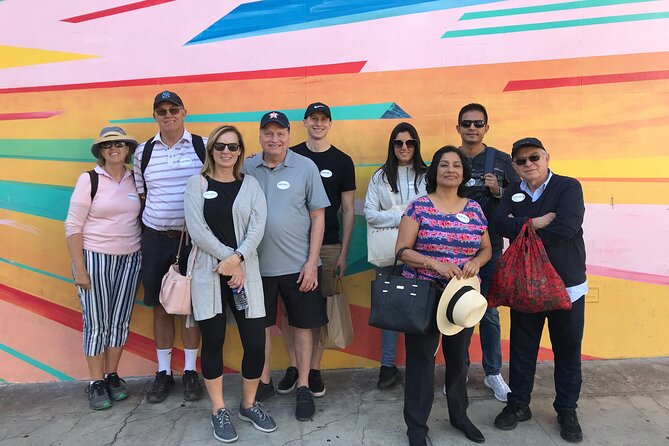
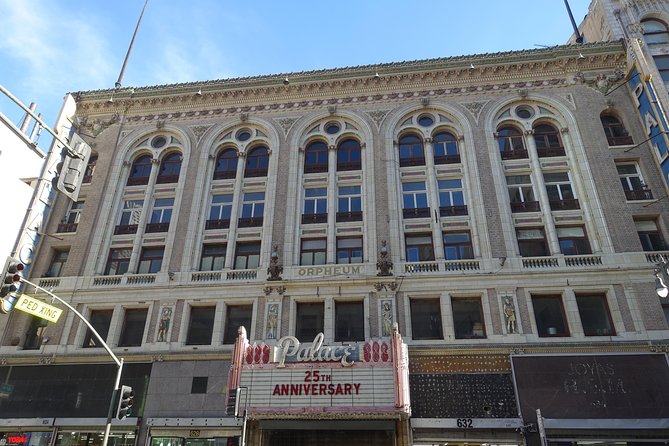
Next comes the Historic Theater District with time listed at about 20 minutes. The big promise here is the focus on the largest collection of pre-WWII theaters in America. That’s a specific angle, and it matters because downtown LA didn’t always look like it does now—those theaters are part of the city’s cultural backbone.
One planning consideration: admission here is listed as not included. That doesn’t mean you miss the area, but it does mean you should be ready for an optional experience depending on what’s offered at that stop.
If you love older showmanship—ornate facades, grand entrances, and that old-Hollywood sense of occasion—this part of the tour gives you the right context without making you commit to a long museum-style visit.
Bradbury Building: the classic interior you can actually see
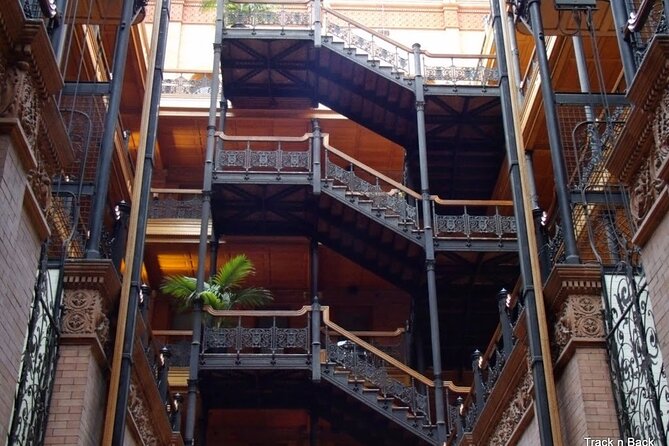
This is the stop most people remember. The Bradbury Building is described as the oldest standing office building in Los Angeles, and the tour includes it as a short visit (around 10 minutes) with admission listed as free.
The key detail is what the tour does with that access: feedback highlights that you get to see the inside, not just the exterior. That’s huge, because the Bradbury Building isn’t famous only for being old—it’s famous for what it looks like from inside, with that dramatic light-and-structure feel.
Why it’s valuable on a walking tour: it’s easy to underestimate downtown architecture if all you see are street facades. Giving you interior time turns the building into something you can picture later when you spot similar designs around the city.




Old Bank District and Spring Street of the West: architecture tied to money
After Bradbury, the route lands in the Old Bank District. This stretch is often described as Spring Street of the West, and the tour schedules about 25 minutes here, which tells you the guide expects to spend more time on this section than the others.
This is where the walking tour helps you understand downtown’s old purpose. Bank districts tell you who had power and how the city wanted to look when it was trying to project stability. You’re not just seeing pretty buildings; you’re learning how streets and structures were built to signal wealth, legitimacy, and staying power.
Admission for this stop is listed as free, so it’s mostly about walking the area, looking closely, and letting the guide point out details that you’d likely miss on your own.
Artistic bookstore stop: a small detour with big “LA personality”
Between the Old Bank District and the Jewelry District, there’s a stop listed simply as an artistic bookstore. No specific admission info is given, and the visit time isn’t detailed—but this kind of stop adds variety in a good way.
Why I like it: it breaks up the architecture-heavy focus and reminds you that downtown isn’t only about landmark structures. It’s also about creative businesses, odd corners, and the kind of local flavor that doesn’t show up on a brochure.
If you enjoy people-watching and browsing when it’s not too rushed, this is the sort of stop that makes the tour feel like you’re moving through neighborhoods, not checking boxes.
Jewelry District and Spring Arcade: from display windows to tucked-away dining
The Jewelry District is next, and it’s billed as America’s largest jewelry district. The tour gives it about 10 minutes with admission listed as free. Even if you’re not shopping, this is a visually distinctive area—tight streets, storefronts, and the sense of an industry that’s always been part of downtown’s economy.
Then you move into the Spring Arcade Building, described as a collection of boutique restaurants. This stop is also around 10 minutes and listed as admission free. The Spring Arcade shift is smart because you go from a commercial district vibe into something that feels more like downtown leisure—where you can imagine grabbing a bite or meeting a friend.
What this sequence does for you: it shows downtown as a system. The city’s golden-era business areas weren’t isolated. They sit near modern daily routines—eating, browsing, and popping into a place because it’s nearby.
Clifton’s Republic: iconic cafeteria energy, with admission not included
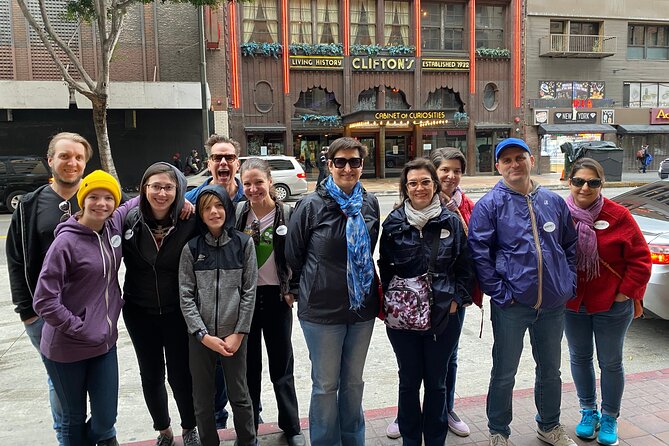
Stop Clifton’s Republic is listed as an iconic cafeteria since 1932, with about 5 minutes on the schedule. Admission is noted as not included.
This stop can work two ways. If you want a quick taste of classic cafeteria culture, you’ll likely appreciate it as a recognizable downtown institution. If you’re trying to keep spending controlled, you’ll still get the context without feeling forced into a long stop.
Either way, it’s a classic LA kind of moment: the guide helps you see why something old-school still matters in a city that loves to reinvent itself.
The Biltmore Los Angeles: grand hotel finale before the central square
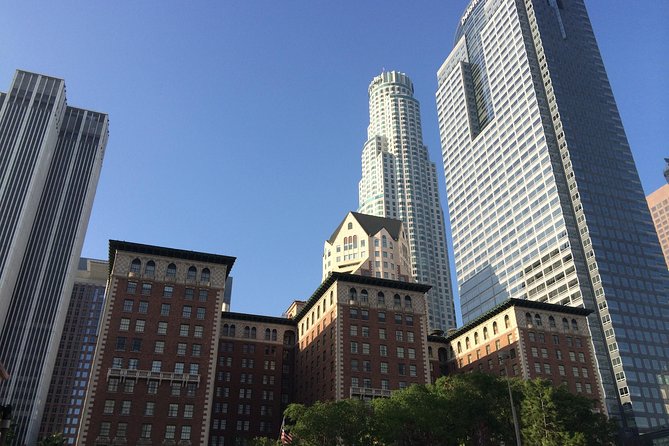
The tour continues to the Biltmore Los Angeles, described as the grandest hotel of Los Angeles. The schedule gives it about 10 minutes, with admission listed as free.
Hotels like this are useful for a walking tour because they reflect ambition. Downtown LA has always been about getting attention, attracting business, and hosting visitors—grand hotels were part of that strategy. You’ll get a sense of how the city wanted to be perceived, not just how it functioned.
From there, the tour finishes at Pershing Square. This is listed as LA’s central square, with about 10 minutes on the schedule.
Pershing Square ending: a convenient reset for your next move
Ending at 532 S Olive St means you’re close to a downtown landmark that’s easy to orient around. The tour notes that this end point is about a 5-minute walk back to the starting area, and your guide can point you in the direction.
Why that matters: downtown days can get complicated fast. A clear finish point helps you avoid the “now what?” feeling. You can regroup, decide where to eat, or hop on public transportation while downtown is still fresh in your mind.
Price and value: what $38 buys in real DTLA time
At $38 per person for about 2 hours, this isn’t a bargain in the $15 sense. But it also isn’t a “pay for a bus ride” price. You’re paying for a local guide, tight routing, and several stops with admissions marked as free.
A practical way to judge value:
- You’re getting multiple major landmarks in one go (market, Bradbury Building, theater area, jewelry area, Spring Arcade, grand hotel).
- Several of the main stops list admission ticket free, including Grand Central Market, the Bradbury Building, Old Bank District, Jewelry District, Spring Arcade Building, Biltmore Los Angeles, and Pershing Square.
- The tour is capped at 20 travelers, which keeps the experience from turning into a stampede.
If you’re a first-time visitor, this tour is a good “get your bearings” buy. If you’re a returning visitor, it can still be worth it because the guide’s architectural framing can make downtown feel new again—even when you think you already know the streets.
One extra note from feedback: a couple people mention the tour running longer than the listed two hours. That’s often a good sign of a guide who doesn’t rush stories just to hit a stopwatch.
Logistics that matter on the ground: mobile ticket, weather, and comfortable pace
This is a mobile ticket tour, and it’s near public transportation. That helps if you want to avoid driving downtown or don’t want to deal with parking stress.
The tour also requires good weather. If conditions are poor, you should expect the tour to be rescheduled or refunded based on the company’s weather process.
Finally, the pacing feels designed for real bodies. Feedback includes mentions of a well-paced walk, chances to stand or sit in the shade, and a guide willing to answer questions. If you want a downtown history stop that doesn’t feel like a forced march, this one seems to fit.
Who should book this Old and New Downtown Los Angeles walking tour
This tour is a strong match if you:
- Want a guided DTLA orientation built around iconic architecture
- Care about seeing history in place—rather than reading it later
- Like small-group walking tours with time for questions
- Are traveling with family and want a route that doesn’t turn into a stressful sprint
It may be less ideal if you:
- Only want fully free attractions, since some stops list admission as not included
- Are expecting long museum-style indoor experiences at every stop (the stops are timed and move fairly quickly)
Should you book this tour?
If it fits your schedule, I’d book it. For $38 and about two hours, you get a thoughtful sampling of downtown’s big-name landmarks: Grand Central Market, Bradbury Building inside, the Historic Theater District, plus the shopping-and-street texture around the Jewelry District and Spring Arcade. It’s also the kind of tour that helps you decide what to do next, because you leave with a clearer mental map of downtown.
If you’re the type who loves architecture, old downtown stories, and practical orientation, this is one of the easiest ways to make DTLA click.
FAQ
How long is the Old and New Downtown Los Angeles Walking Tour?
The tour is listed as approximately 2 hours.
How much does the tour cost?
The price is $38.00 per person.
Where does the tour start and end?
It starts at 349 S Hill St, Los Angeles, CA 90013 and ends at 532 S Olive St, Los Angeles, CA 90013 near Pershing Square.
What time does the tour meet?
The start time is 1:30 pm.
What’s included for admissions at the stops?
Several stops list admission as free, including Grand Central Market, the Bradbury Building, Old Bank District, the Jewelry District, Spring Arcade Building, the Biltmore Los Angeles, and Pershing Square. The Historic Theater District and Clifton’s Republic list admission as not included. Ticket info is not specified for the Shortest Railway in the World or the artistic bookstore.
Is this tour limited to a small group?
Yes. The maximum group size is 20 travelers.
Does the tour run in bad weather?
The tour requires good weather. If it’s canceled due to poor weather, you’ll be offered a different date or a full refund.
Can I cancel and get a refund?
You can cancel for a full refund up to 24 hours in advance. Within 24 hours of the start time, the amount paid is not refunded.