REVIEW · LOS ANGELES
West Harbor LA 45-Minute Narrated Harbor Cruise of San Pedro
Book on Viator →Operated by Harbor Breeze Cruises · Bookable on Viator
Cargo ships and city views, right on cue. This short San Pedro cruise is a real taste of how Los Angeles moves goods and people, with live English narration and big picture windows. In just 45 minutes, you glide past working terminals and famous waterfront sights without the stress of a long day.
I especially like the way the crew keeps the story clear: container cranes, channel pilots, and the logic of safe navigation get explained in plain language. I also like the onboard setup—inside climate control for comfort, outside seating for photos, and multiple restrooms so you do not have to time your trip around facilities.
My main caution: double-check that you are booked for a sailing operating from San Pedro on your date. There have been hiccups when people ended up routed to a different harbor than expected, and that is a headache you can avoid.
In This Review
- Key highlights at a glance
- A 45-minute harbor cruise that packs real Port energy
- Where you board in San Pedro (and why that location matters)
- Inside the boat: comfort, seating, and the narration
- Itinerary walkthrough: what you see along the Port of Los Angeles
- Container cranes and the world’s trade engine
- Port-funded waterfront development and an open-air vibe
- Battleship USS Iowa: the museum you can add
- City views and the changing shoreline
- Ferry Building era + seafood at a San Pedro icon
- Historic Tall Ship and the AltaSea science-and-sustainability push
- The 1915 Warehouse No. 1 and the multilingual water tower
- Pilots guiding ships through the channel
- An American Victory-class cargo ship
- APM Terminals and the candy-cane gantry cranes
- Bridge crossing: Terminal Island and Long Beach connection
- AMP Alternative Maritime Power: cleaner electricity for ships
- Fireboat Warner Lawrence: big power on standby
- Price and value: what $15 really buys you
- Best for: who should book this cruise
- Things to consider before you go
- Should you book this harbor cruise?
- FAQ
- FAQ
- How long is the cruise?
- What language is the narration in?
- Is food included, or can I buy it onboard?
- Are alcoholic drinks available?
- Where does the tour start and end?
- What weather conditions are required?
- Is parking included?
- What’s the maximum group size?
Key highlights at a glance
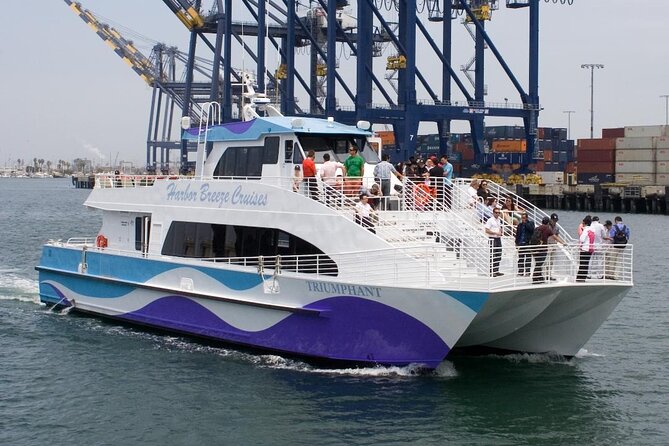
- Port of Los Angeles from water level: see cranes, container terminals, and major ship traffic up close
- Live narration that actually connects the dots: the captain/MC help you understand what you are seeing
- A stop near USS Iowa: and a bundle option can include a General Admission ticket to board
- Clean-energy port details: learn about AMP Alternative Maritime Power for plugged-in ships
- Historic waterfront stops: warehouses, the Tall Ship area, and the AltaSea vision
A 45-minute harbor cruise that packs real Port energy
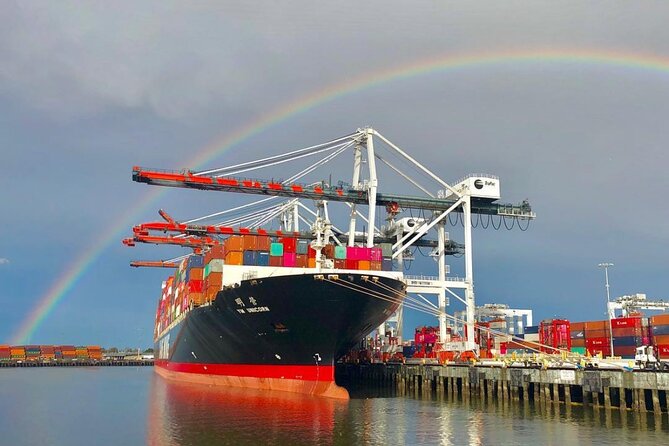
This is not the kind of “pretty harbor loop” where you spend most of the time staring at the horizon. You spend most of the time with the Port of Los Angeles as the star—container cranes, cargo ships, and the infrastructure that keeps international trade moving.
The timing works. Forty-five minutes is short enough that you can slot it in between meals, a seafood stop, and a bit of sightseeing. You also avoid the long stretches where weather changes or you get tired of waiting.
Price-wise, $15 is the big selling point. You are paying for a guided, narrated pass through one of the world’s busiest shipping areas, plus a comfortable boat ride with inside seating and panoramic windows. Add that the cruise includes live onboard storytelling, and you start to see why it hits well as a value play—especially if you want Port context and not just views.
You can also read our reviews of more boat tours in Los Angeles
Where you board in San Pedro (and why that location matters)
You start and end at 550 S Harbor Blvd, San Pedro, CA 90731. This is a convenient spot because you are close to several waterfront attractions, and you are not stuck crisscrossing the city before and after.
Parking is not included, but there is paid parking nearby. If you want an easy day, plan to arrive early enough to park, walk to the ticket redemption point, and still have a calm window before boarding.
This cruise also works well if you like combining activities: you can do the boat first, then transition to nearby food and sights. One traveler’s day plan mentioned doing a boat ride and dinner within about two hours thanks to the location right by a famous fish market—exactly the kind of flow a short cruise is good at.
Inside the boat: comfort, seating, and the narration
The ride happens on a quiet, low-emission vessel, and that matters more than you might think when you are spending time near active port traffic. The boat has inside climate-controlled seating plus outside spots for fresh air and photos. You also get large panoramic windows, so you do not feel trapped indoors even if it gets warm or breezy.
There are multiple restrooms onboard. That sounds basic, but on short cruises it changes the whole experience. You spend less time thinking about logistics and more time watching the port.
The narration is in English, and it is delivered live by a seasoned MC onboard along with the captain’s perspective. In practice, that means you get both the big-picture story and the practical “here’s what you are looking at” details. One of the most praised aspects is how the captain provided strong factual narration, not just general commentary.
Alcohol is served only to guests age 21 and up. Food and beverages are not included, but you can purchase drinks and snacks onboard.
Itinerary walkthrough: what you see along the Port of Los Angeles
Even though the timing is tight, the route is designed to hit a mix of working port operations and recognizable waterfront landmarks. Think of it like a narrated route map, where each segment gives you a new layer of what San Pedro and the Port actually are.
Container cranes and the world’s trade engine
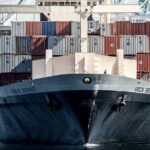
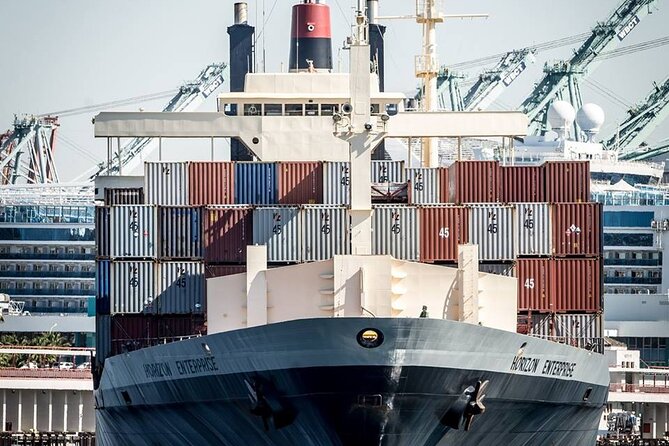
Right away, you travel through the Port of Los Angeles, described as the busiest container port in the Western Hemisphere. You’ll spot container cranes and large cargo ships coming and going—ships that do not look like anything you usually see from land.
What I like about this segment is the “aha” factor. When you see the scale up close, it becomes easier to understand why the Port needs everything it has: terminals, channels, pilots, and the equipment that moves containers efficiently.
Practical tip: if you care about photos, try to position yourself where the window glare is minimal, and be ready for quick changes in angles as the boat turns.



Port-funded waterfront development and an open-air vibe
Next you pass a port-funded $36 million infrastructure project that is planned as a family-friendly destination. You’ll hear about the blend of office spaces with a fresh market, shopping, dining, a dynamic promenade with ocean-side access, and an open-air amphitheater for live entertainment.
Even if you do not plan to spend time onshore here, this is a useful stop because it shows the Port as more than shipping. It’s also an active public-facing shoreline that connects industry with community space.
Battleship USS Iowa: the museum you can add
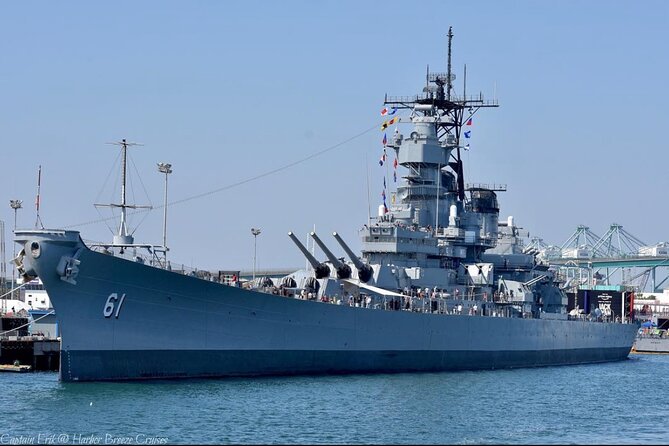
You cruise past the USS Iowa, one of Los Angeles’s best museums. There is also a bundle option that can include a GA ticket to board the battleship.
Keep your expectations aligned: the cruise itself gives you the view from the water. Boarding the ship depends on the bundle option you choose. Still, the pass-by moment is great because it makes the museum feel part of the bigger harbor story rather than a separate attraction.
City views and the changing shoreline
The route also gives you great views of the city, which is where the cruise stops feeling like only “industrial watching” and starts feeling like a scenic harbor day. You get perspective on how the Port and downtown skyline coexist in the same broader metro area.
Ferry Building era + seafood at a San Pedro icon
You pass the previous home of the Ferry Building, a nod to the area’s earlier maritime identity before modern port operations dominated the scene.
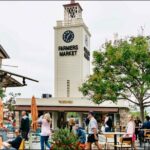
Then you move to the waterfront where San Pedro seafood is a main event. You’ll pass the San Pedro Fish Market, a landmark serving fresh seafood for almost 70 years. Even if you are not eating yet, seeing it from the water helps you understand why this part of San Pedro has such a loyal following.
If you are hungry, this cruise pairs nicely with a post-ride meal. The start point is close enough that you can keep the day easy rather than turning it into a major commute.
Historic Tall Ship and the AltaSea science-and-sustainability push
You also see the area connected with LA’s Historic Tall Ship. That kind of sight is a good contrast to the working cargo terminals, because it reminds you this shoreline is used for more than shipping.
Another major theme is AltaSea, a place aiming to bring leaders in science, business, and education together for sustainability-focused innovation. You’ll hear that UCLA and USC are moving their education center to this area in the future. Even if you are not stepping onto the campus, it’s a compelling angle: the harbor is planning for tomorrow as much as it supports today.
The 1915 Warehouse No. 1 and the multilingual water tower
One of the more story-rich parts of the route involves a built-in-1915 warehouse area. Warehouse Number One is noted for its concrete walls about four feet thick, and today it is used mainly for warehousing small items. It can also show up as a Hollywood film location.
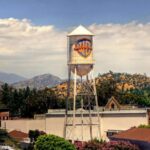
On top of the warehouse is a water tower with greetings in 13 languages, welcoming crews and passengers arriving from ships arriving daily. That single detail turns the industrial waterfront into something human. You are not just watching machines—you are watching a place used by real people, from different countries, on a daily rhythm.
Pilots guiding ships through the channel
At sea in a major harbor, safety depends on expertise. You pass moments where the pilot assists the captain to guide the vessel safely inside the main channel, because these pilots know the waters better than other mariners.
This is one of those details I’m glad they include. A Port cruise can easily become “look at the ships,” but the best narration gives you the how and why. Here, the why is safety and local knowledge.
An American Victory-class cargo ship
Another highlight is the passing of a 10,000 ton fully operational American Victory-class cargo ship. It is restored and operated by an all-volunteer crew of U.S. Merchant Marine Veterans of WWII.
This is powerful to see from the water because it adds a human and historic layer to the modern container operations. You are seeing something older in service, still moving and still staffed by people with deep ties to maritime tradition.
APM Terminals and the candy-cane gantry cranes
When you get to the container terminal area, the scale becomes very real. You’ll learn the Port’s largest container terminal is operated by APM Terminals, part of the A.P. Moller Maersk world shipping network. You will also pass the second largest container terminal at the Port of Los Angeles.
Then you’ll spot the recognizable candy-cane striped gantry cranes. They are described as special machines developed specifically for container terminals, with costs that can reach nearly $15 million each depending on where and how they are built.
Photo note: those cranes are visually dramatic. If you are carrying a camera, this is where you stop thinking about “making it a souvenir photo” and start thinking about composition.
Bridge crossing: Terminal Island and Long Beach connection
You pass the bridge built in 1963 that connects San Pedro and the end of the Harbor Freeway with Terminal Island and Long Beach. It’s just over 2 miles long.
This is more than a quick visual. It helps you map the geography. Once you understand the physical connections, the Port stops feeling like random parts and starts feeling like one big coordinated system.
AMP Alternative Maritime Power: cleaner electricity for ships
You also learn that the Port of Los Angeles is the first in the world to plug containerships into clean electrical power, called AMP Alternative Maritime Power.
This part is easy to miss if you are only watching for ships. I like that the cruise explains it because it adds a modern environmental angle: the Port is not just about moving containers; it’s also trying to reduce pollution impact by shifting from onboard generation to shore-based power.
Fireboat Warner Lawrence: big power on standby
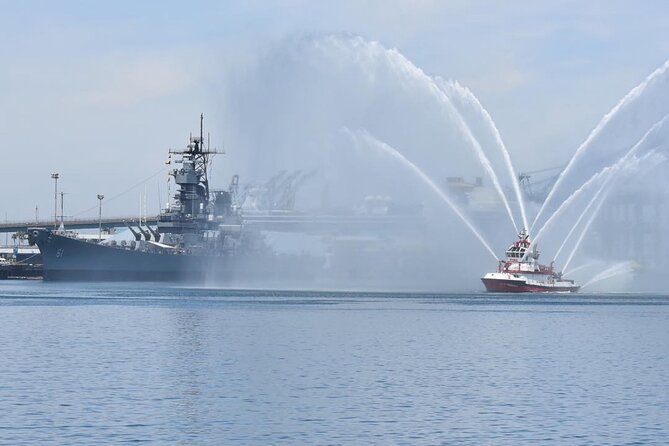
Finally, you pass the LA Fire Department fireboat number two, the Warner Lawrence, described as one of the world’s most powerful fireboats. It can discharge 38,000 gallons of water per minute.
That detail is a reminder that ports are not just commerce. They are high-risk operations that require serious emergency readiness.
Price and value: what $15 really buys you
At $15 per person for about 45 minutes, you are buying three things: access, context, and comfort.
Access: you get water-level views of the Port that you cannot easily replicate from sidewalks.
Context: live narration explains what you are seeing—terminals, navigation, and the port’s clean-power approach.
Comfort: climate-controlled interiors, plenty of seating options, panoramic windows, and restrooms.
The only “extra” is food and drinks, which cost extra if you want them. But you are not locked into a pricey package just to enjoy the core cruise.
If you choose the bundle option, you can also pair the harbor view with boarding the USS Iowa via a GA ticket. That turns the cruise into a two-part maritime day without adding much travel time.
Best for: who should book this cruise
This works best for you if:
- you want a short, manageable outing that still feels like a real “special subject” day
- you like ships, ports, and how big systems work
- you want an easy match with seafood and other San Pedro waterfront plans
It also fits families because the route mixes working Port sights with public-facing waterfront development and landmarks you can recognize from shore.
Things to consider before you go
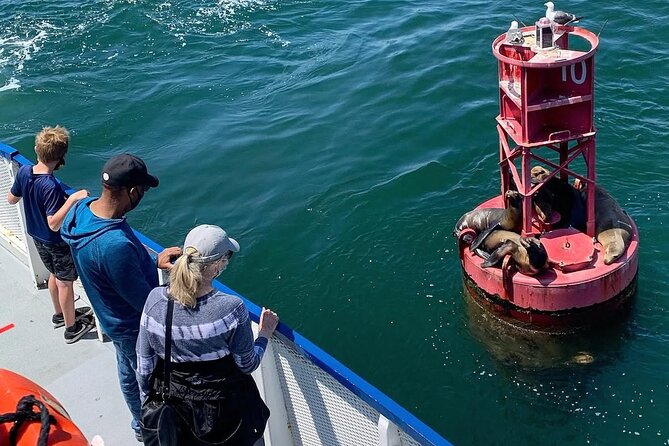
- Weather matters. The tour requires good weather, and if it’s canceled due to poor conditions, you will be offered a different date or a full refund.
- Seat planning helps. If you get cold easily, prioritize inside climate-controlled seating. If you want photos, pick an outside position early.
- Watch the booking details. The San Pedro vs. Long Beach issue is rare, but it has happened—so confirm your departure point and sailing date.
And one more practical note: if you think there’s any chance you might need to cancel, do it early rather than waiting. In at least one emergency situation, reaching out did not lead to fast communication, and that’s not something you want to gamble on.
Should you book this harbor cruise?
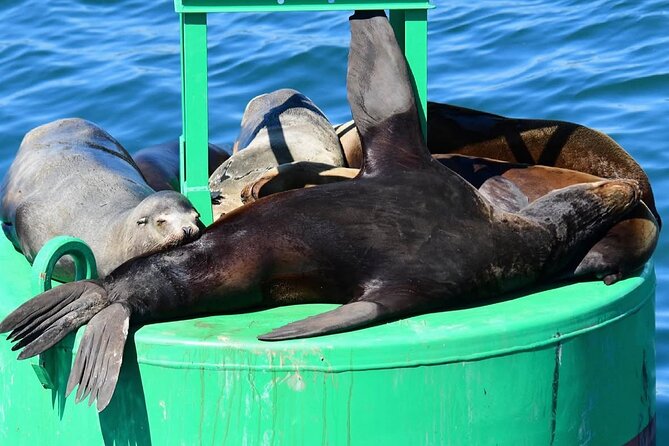
If you want a budget-friendly way to understand the Port of Los Angeles from the water, I think this is a strong yes. The combination of live narration, high-value sights like container terminals and the USS Iowa area, plus the comfort of indoor seating makes it a smart use of 45 minutes.
Skip it only if your main goal is purely scenic sightseeing with minimal industrial focus. This cruise is built around the port’s operations and the story behind them. If that’s what you’re after, you’ll likely feel like you got more than your money’s worth for a short trip.
FAQ
FAQ
How long is the cruise?
The cruise is about 45 minutes.
What language is the narration in?
The narration is offered in English.
Is food included, or can I buy it onboard?
Food and beverages are not included, but you can purchase them onboard.
Are alcoholic drinks available?
Alcoholic drinks are only served to travelers 21 years old and above. Guests under 21 are served non-alcoholic drinks.
Where does the tour start and end?
The meeting point and ticket redemption point are at 550 S Harbor Blvd, San Pedro, CA 90731, USA. The tour ends back at the meeting point.
What weather conditions are required?
This experience requires good weather. If it is canceled due to poor weather, you will be offered a different date or a full refund.
Is parking included?
Parking is not included, but there is plenty of paid parking nearby.
What’s the maximum group size?
The tour has a maximum of 149 travelers.