REVIEW · LOS ANGELES
Pacific Coast Highway: Smartphone Audio Tour, LA to Santa Maria
Book on Viator →Operated by Tripvia Tours · Bookable on Viator
That first coastline sounds different with audio. This smartphone tour turns a Pacific Coast Highway drive into bite-size stops with trivia questions and GPS-triggered playback, so you’re not just watching scenery roll by. One drawback to note: the tone can feel a bit school-like and heavy on facts about terrain, and tech hiccups can happen if your phone can’t handle the initial setup download.
The upside is how flexible it feels. You’ll use your own car, your own timing, and you can skip stopping unless you want to—yet the narration keeps nudging you toward places you might otherwise miss along the route.
In This Review
- Key Things to Know Before You Set Off
- A Phone-Guided Drive That Actually Keeps You Engaged
- The big trade-off
- Price and Value: $11.99 for a Coastline Education
- Getting Set Up: Download Once, Then Coast Without Data
- One practical tip
- Los Angeles to Santa Monica: Venice Canals and Beach Trivia
- Santa Monica and Will Rogers State Beach
- Malibu: Beaches, Chumash Time, and the Coast Underwater
- What to watch for while you drive
- Inland Bluffs and Boney Mountain: The View From Higher Ground
- A note on how to enjoy this section
- Oxnard and Ventura County: Strawberries, a Deep-Water Port, and River Systems
- Ventura’s Catholic heritage
- Santa Barbara Area: Missions, Monarchs, and Coastal Stories
- What stands out here
- Coastal Tragedy and Waterfalls: 2015 and Nojoqui Falls
- La Purisima, Bandits, and Vandenberg’s Space Force Link
- Santa Maria Valley and Beyond: Pinot, Chardonnay, and Ridge Views
- Pacing That Works: When You Should Stop and When You Should Drive On
- A word of caution if you skip stops
- Who This Tour Suits Best (And Who Might Want Something Else)
- Should You Book Pacific Coast Highway: Smartphone Audio Tour, LA to Santa Maria?
- FAQ
- How long is the Pacific Coast Highway smartphone audio tour?
- How much does it cost?
- What language is the audio available in?
- Do I need a cell signal during the tour?
- What do I need to start the tour?
- Where does the tour start and end?
- Can I start anywhere along the route?
- Is transportation included?
- Are attraction tickets included?
- What if I need to cancel?
Key Things to Know Before You Set Off
- Offline-first after download: the tour needs a good signal only to download at the start, and it’s designed to run without ongoing data or signal
- 4–5 hours of content: take the recommended time or stretch it out; there are no time constraints
- One booking per vehicle: priced per group up to 15, so it can be good value for families or friend squads
- GPS auto-plays as you approach stops: useful when you’re driving and don’t want to manually tap every segment
- More than just beaches: you also get marinas, parks, mission sites, and even space-era and missile/defense references
A Phone-Guided Drive That Actually Keeps You Engaged
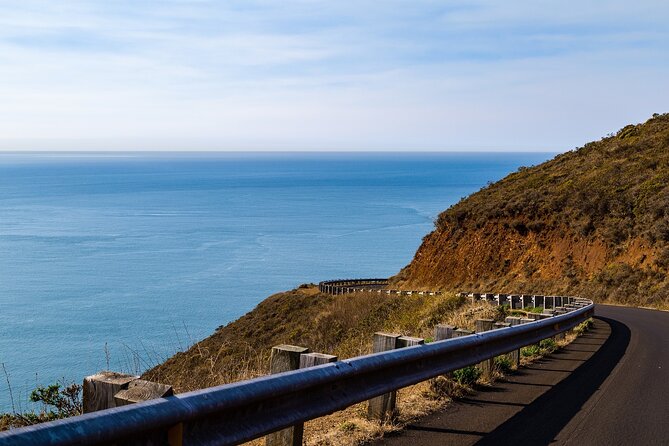
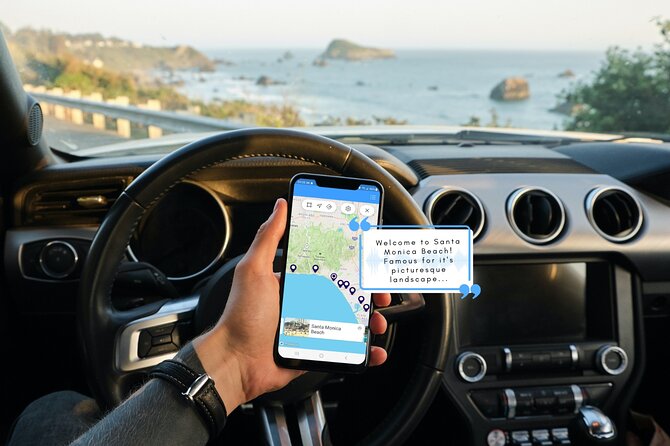
A road trip along the California coast is already beautiful. What makes this tour work is that it gives the drive a rhythm: approach a spot, listen, learn a detail, then roll on to the next view.
For $11.99 per group (up to 15 people), you’re not paying per person for a bunch of separate tickets. You’re basically buying one self-guided “radio documentary” that lives in your car for several hours. And because it’s a private experience for your group, you don’t have to coordinate with strangers—just with your own playlist vs. audio tour choice.
You can also read our reviews of more tours and experiences in Los Angeles

The big trade-off
Audio tours can’t replace being able to pause, walk around, and ask real-time questions. Also, this one leans into geography and land-form storytelling, so if you want pure beach vibes with minimal facts, you might find some sections a little dry. On top of that, the tour depends on your phone setup; if the initial download or playback doesn’t cooperate, you’ll feel it fast.
Price and Value: $11.99 for a Coastline Education
At $11.99 per group (up to 15), the math is pretty friendly. If you’re driving with even a few people, the cost per seat drops quickly compared with paid attractions or guided tours where everyone pays individually.
I also like that the tour is designed for practical road-tripping: you can take the recommended 4–5 hours, or you can slow down for roadside photo stops and longer beach breaks. That flexibility matters on the Pacific Coast Highway, where the drive is the point and “rushing” the coast often turns the trip into parking-lot frustration.
One more value angle: the included experience assumes you’re using your own car. That keeps expenses simple—no separate transportation costs—and it lets you choose where to park and how long to stay when the narration points you toward a stop.
Getting Set Up: Download Once, Then Coast Without Data
This tour is built around your smartphone. You’ll need a phone or tablet, and you’ll need a good mobile or WiFi connection to download the tour at the beginning.
After that initial step, the experience is designed so you don’t need a signal or data during the tour. In plain terms, that’s huge on the coast, where cell service can be spotty. It also means you’re less likely to lose the audio mid-drive if your connection drops out.
One practical tip
Before you leave, make sure your phone battery is happy. The tour runs in the background while you’re driving, and you’ll want your navigation and audio to be reliable at the same time. If you rely on a weak connection during download, you’re more likely to run into playback problems later.
You can also read our reviews of more tours and experiences in Los Angeles




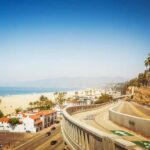
Los Angeles to Santa Monica: Venice Canals and Beach Trivia
The tour starts in Los Angeles and aims for a scenic sequence through the famous coast neighborhoods and viewpoints. Early on, it moves you through spots where the city changes fast—studies and institutions nearby, then suddenly boats, then beach culture.
You’ll hear a trivia-and-context style story at a Roman Catholic school connected to the Loyola College and Marymount College merger. It’s not a “major attraction” stop in the classic sense, but it’s a reminder that this route isn’t only about beaches—it’s also about how Los Angeles got built.
Then you shift to a marina area developed in the 1950s. The narration calls it North America’s largest man-made small-craft harbor, and that detail gives you a quick mental picture for what you’re seeing: this is an engineered boating zone, not a natural harbor.
Next comes Venice—home of Venice Beach and the Venice Canals. I like that this section doesn’t just say the obvious name; it gives you a reason to look twice at what you’re rolling past. If you’re the type who usually drives by quickly, this kind of “wait, look at that” approach tends to slow your eyes down.
Santa Monica and Will Rogers State Beach
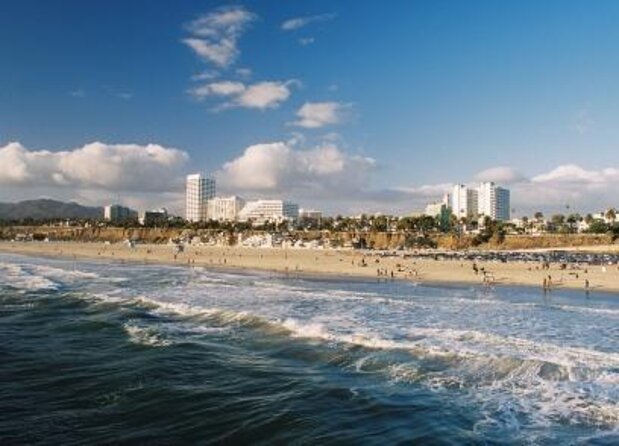
From there, the tour runs you by beaches including Will-Rogers State Beach and Santa Monica Beach. Expect more than scenic praise: you’ll get trivia you can actually use later, the kind that makes you sound like you paid attention even if you didn’t look up from the dashboard.
Malibu: Beaches, Chumash Time, and the Coast Underwater
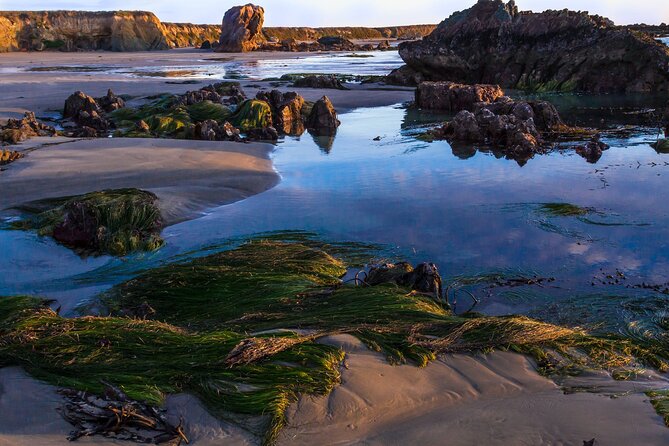
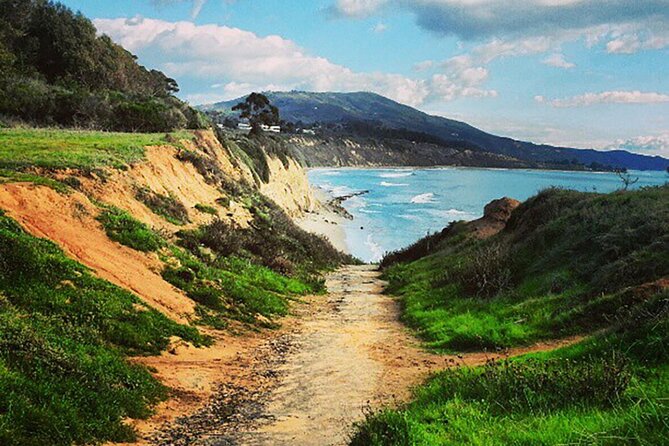
Malibu is where the narration starts stacking up. The tour describes Malibu as a 21-mile stretch of California beach, and it builds that scale into the stories—so you understand why this coastline feels like a long string of separate moods.
It also hits the big-name stops in a way that makes them easier to recognize while driving:
- Zuma Beach and the Point Dume filming location
- El Matador, with massive rock formations
- A coastal reef with details tied to scuba diving sights
I especially like the inclusion of Indigenous history in this stretch. The audio talks about the Chumash people living here almost 8,000 years ago, along with their extensive trading system across California. That’s a meaningful counterweight to the entertainment-and-celebrity vibe you might expect along Malibu’s coastline.
What to watch for while you drive
Even if you don’t pull out of the car, you’ll get small prompts: look for rock structure at El Matador-type areas, and understand that reefs and underwater sites have a “surface” story too. It’s the difference between admiring the coast and understanding the coastline.
Inland Bluffs and Boney Mountain: The View From Higher Ground
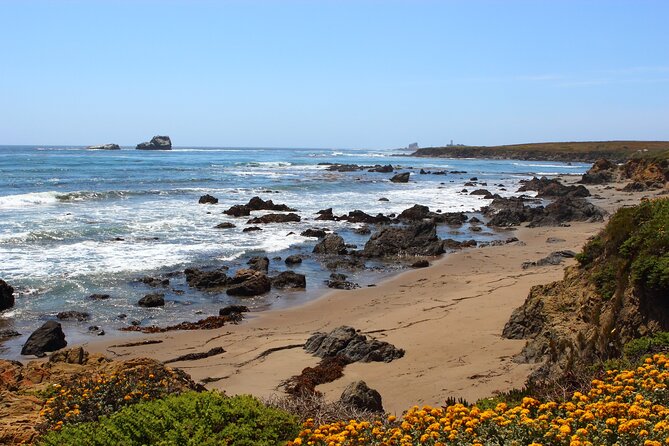
Not every dramatic moment on this route is on sand. The tour brings you along inland bluffs tied to the foothills of the Santa Monica Mountain range. This is a good reminder that the coast isn’t just flat beach—it’s a steep neighborhood of ridges, canyons, and steep trails.
You’ll hear about hiking trails through native forests with stunning coastline and beach views. Then the audio climbs higher (figuratively and in theme) with Boney Mountain, described as one of the highest peaks in the Santa Monica Mountains.
There’s also an eye-opening defense-tech reference: you’ll hear about missiles like Polaris, including the detail that it’s a first U.S. submarine-launched ballistic missile. That’s a weirdly specific story for a road trip—but that specificity can make the route memorable.
A note on how to enjoy this section
If you’re the “I just want to see the ocean” type, you can treat this section as scenic context. But if you like knowing why places look the way they do—how mountains sit behind beaches and how trails fit into the geography—this part will feel satisfying.
Oxnard and Ventura County: Strawberries, a Deep-Water Port, and River Systems

As you move along, the tour shifts into a California “working coast” mode—less postcard, more real land and industry.
You’ll learn that California supplies over 85 percent of U.S. strawberries, with a third from right here in the Oxnard valley. That kind of fact is useful because it changes how you interpret fields and farmland you might otherwise ignore from the road.
The tour also describes the Santa Clara River system as the largest natural river system in Southern California, draining several mountain watersheds over 84 miles. Then it talks about Ventura County having roughly 825,000 Californians, with most living within the coastal plains at the foot of the Topatopa Mountains.
And yes, you’ll hear about ports too: the narration mentions a port on the shores of the city and calls it the only deep-water port between Los Angeles and San Francisco. It’s the sort of line that makes you realize the coast isn’t only leisure—it’s infrastructure.
Ventura’s Catholic heritage
In Ventura’s downtown, the tour shares history about an active Catholic parish, museum, and tourist attraction. If you like the kind of small-town layering where religion, artifacts, and local identity overlap, this is a good segment.
Santa Barbara Area: Missions, Monarchs, and Coastal Stories
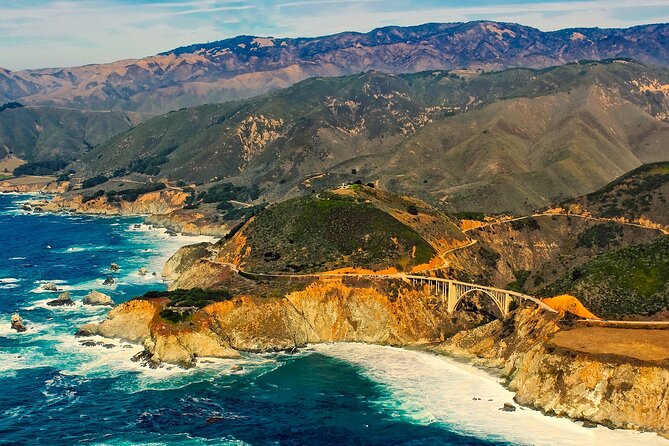
Santa Barbara shows up with a strong time-depth approach: the tour connects the region’s origins to centuries before Europeans arrived, with Chumash presence in the area.
It also gives you modern context, stating Santa Barbara sees over 7 million tourists annually. That’s useful because it frames what you’ll experience if you pull in for photos or a snack—you’re stepping into a major stop, not a sleepy side road.
What stands out here
You’ll hear about the shoreline including nature preserves, a quiet beach, and a Monarch Butterfly Grove. You’ll also learn about the Transverse Ranges mountain range you’re paralleling.
The narration then connects protected land with wildlife, describing a forestland covering over two million acres of coastal mountains and its role in protecting an endangered species. That adds weight to what you might otherwise see as “just hills.”
You’ll also get a marine-life moment: barnacles, starfish, sea anemone, crabs, and sea-sponges in rocky pools when the tide pulls out. This is the kind of detail that makes a coastline look alive even when you’re only watching from the roadside.
Coastal Tragedy and Waterfalls: 2015 and Nojoqui Falls
The audio doesn’t keep everything pleasant. It mentions an environmental tragedy along this beautiful beach in 2015. You’ll also hear about the rugged coastline’s reputation as a drop-off point for nefarious activities.
Then it pivots to a waterfall that’s described as different from typical waterfall erosion patterns: Nojoqui Falls are said to have built outward from the cliff over time rather than eroding upstream. If you like the “why this works that way” angle, this is an engaging fact to keep you listening.
La Purisima, Bandits, and Vandenberg’s Space Force Link
As the route moves toward Santa Maria, the tour picks up even more “California lore” energy.
You’ll hear about a small city claim to fame being split-pea soup. It’s a quirky detail, but those weird local signatures are exactly what makes audio narration fun during a long drive.
Then you’ll get La Purisima—described as 2000 acres restored to its peak period in the 1820s, when it was the seat of mission government. If you want a mission-site stop that feels like a step back in time, this is one to pay attention to.
You’ll also hear about Vandenberg, and that it’s part of a new branch of the U.S. Armed Forces called the Space Force, focused solely on space. That’s the kind of sentence that sounds abstract until you remember you’re driving through real places tied to real programs.
Finally, the route includes a bandit story: hills that served as hideout for Salomon Pico, plus why he was famous. That’s a good example of how the tour mixes geography with narrative.
Santa Maria Valley and Beyond: Pinot, Chardonnay, and Ridge Views
The tour’s end region, Santa Maria Valley, is described as home to the second oldest American Viticultural Area. It also highlights California-grown and bottled Pinot Noir and Chardonnay.
You’ll hear about the Hurricane Deck Trail, described as running along a ridge of a mountain with spectacular views. Then the tour threads in more stops that sound designed for road-trippers: wineries, a conservatory theatre in Santa Maria, rural parks south of Santa Maria, lookouts, and plenty of beach pull-offs.
Later segments mention a long string of beach-focused moments with local names like Leo’s beach and Nick’s beach, plus repeated bits of shoreline scenery you can recognize from the road. The exact length of these segments depends on how long you let each stop play—but that’s part of the design: it’s meant to be flexible.
Pacing That Works: When You Should Stop and When You Should Drive On
This is one of the better smartphone audio tours for the kind of traveler who hates tight schedules. The experience doesn’t impose a time limit. You can take the recommended 4–5 hours, or you can extend it with extra roadside parking.
The GPS-triggered playback also helps you stay oriented. One of the best practical benefits is that the audio can start automatically when you’re coming up on the next spot, which means you’re not constantly fiddling with your screen while driving.
A word of caution if you skip stops
If you choose not to pull over at a point and you let yourself “miss” the moment, it can take a bit to get back on track with where the audio expects you to be. My advice: if you’re going to skip, still let the narration finish unless you’re sure you’ll be back in rhythm quickly.
Who This Tour Suits Best (And Who Might Want Something Else)
This audio tour makes the most sense for you if:
- you’re doing a road trip and want facts without paying for multiple guided tours
- you like trivia that gives you something to share later
- you want offline audio for a route where cell signal can be unreliable
It might feel less satisfying if you want:
- a walk-and-explore guided experience with lots of ticketed stops
- a comedy-heavy narrator style (this leans more toward facts than humor)
- content that’s strictly about beaches with minimal geography context
Also, it’s private for your group, with up to 15 included per booking, so it’s a solid choice for families, couples, and small friend road trips.
Should You Book Pacific Coast Highway: Smartphone Audio Tour, LA to Santa Maria?
If your goal is to turn a long PCH drive into a smarter, more memorable ride, I think it’s worth booking. The price is low enough that you won’t feel stuck, and the offline-friendly design after the initial download is the kind of practical feature that matters on this coastline.
Just go in expecting two things: (1) more geography-and-place facts than pure entertainment, and (2) a phone setup that you should test before you hit the road. If you’re good with that, you’ll likely enjoy how the tour keeps you listening as the coastline changes from big-city Venice energy to Malibu beaches, then toward Santa Barbara and Santa Maria wine country vibes.
FAQ
How long is the Pacific Coast Highway smartphone audio tour?
The recommended length is about 4 to 5 hours, but you can take as long as you like.
How much does it cost?
It costs $11.99 per group, for up to 15 people.
What language is the audio available in?
It’s offered in English.
Do I need a cell signal during the tour?
No signal is required or data used during the tour after the initial setup.
What do I need to start the tour?
You need a good mobile or WiFi connection for the initial download.
Where does the tour start and end?
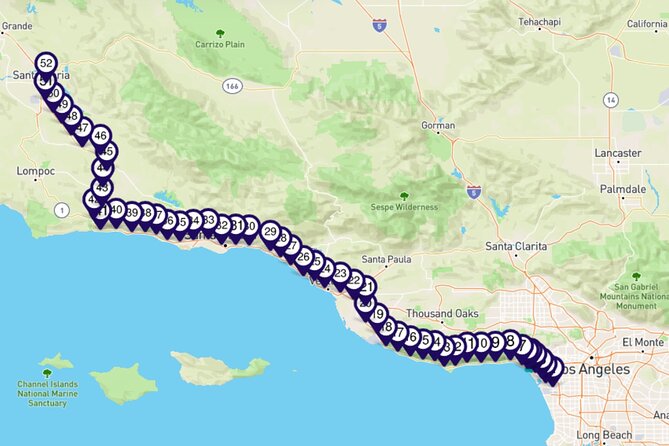
It starts in Los Angeles, CA, and ends in Santa Maria, CA. The Santa Maria end point is on Pacific Coast Highway #101, just south of the city.
Can I start anywhere along the route?
Yes. The tour starts or stops at either Los Angeles or Santa Maria, and you can start anywhere along the route.
Is transportation included?
No. You use your own vehicle.
Are attraction tickets included?
No. Attraction tickets are not included, and some recommended attractions may be closed or inaccessible due to season or other factors.
What if I need to cancel?
Free cancellation is available. You can cancel up to 24 hours in advance for a full refund.