REVIEW · LOS ANGELES
Los Angeles Beginnings Walking Tour
Book on Viator →Operated by LA Walking Tours · Bookable on Viator
Downtown L.A. clicks into place fast. In this 2-hour walk, you connect the dots between Union Station and Calle Olvera, with stories that explain how the city went from mission-and-rail beginnings to today’s arts-and-architecture scene.
I really like having Phil as the guide. His explanations of L.A.’s founding and 250+ year timeline come out clearly, and he’s the kind of person who’s happy to answer questions and share practical ideas for what to do next.
One catch: a few headline stops are not included, so you may need extra money or decide to skip them—especially The Broad, MOCA, and the Angels Flight ride.
- Union Station first: start inside a landmark built to make rail travel feel like ceremony
- Olvera Street quick-hit: birthplace energy, plus easy browsing along the historic corridor
- Real anchors of the old L.A.: you pause at the oldest standing church and a longtime government building
- Grand Park to Disney Hall: public space and major architecture show up in the same stretch
- Museum add-ons are optional: The Broad and MOCA are on the route but tickets are extra
- Finish with views and a ride: Angels Flight gives you skyline angles plus a short funicular experience
In This Review
- A First-Time Friendly Route Through “Beginnings” Downtown
- Union Station: Start With the Vaulted Ceiling and the Rail Story
- Calle Olvera: Los Angeles Birthplace Energy in 15 Minutes
- Old Church + Old Government: The Anchor Stops Most People Skip
- Cathedral to Grand Park: “Mother Church” and the Arts Centered Around You
- Disney Concert Hall by Frank Gehry: Architecture You Can Actually See
- The Broad and MOCA: Two Stops That Decide Your Extra-Ticket Budget
- Ending at Angels Flight: Skyline Views and the Short Funicular Ride
- Price and Value: Why $38 Can Be a Smart Downtown Buy
- Weather, Timing, and What to Expect From a 2-Hour Walk
- Who This Tour Fits Best (And Who Might Want Something Else)
- Should You Book the Los Angeles Beginnings Walking Tour?
- FAQ
- How long is the Los Angeles Beginnings Walking Tour?
- Where do I meet, and where does the tour end?
- Is the fare for Angels Flight included?
- Are museum tickets included for The Broad or MOCA?
- What if the weather is bad?
- Can I get a full refund if I cancel?
A First-Time Friendly Route Through “Beginnings” Downtown
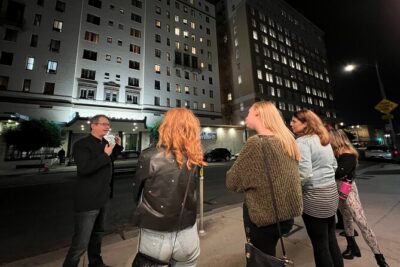
If you want downtown L.A. to make sense quickly, this is a smart way to start. The walk is designed as a timeline in motion: rail glamour, mission-era roots, then major landmarks that helped reshape the city’s center into an arts destination.
At $38 per person for about 2 hours, you’re paying mainly for the guide’s ability to connect places to stories. Since many of the core stops are marked free, you’re not forced into museum-ticket spending just to get value out of the tour.
And the group size stays small—up to 20 people—so it’s easier to follow along and ask questions without feeling lost. I also like that the format uses a mobile ticket, which keeps you from hunting for paper confirmations on your phone.
Union Station: Start With the Vaulted Ceiling and the Rail Story
You kick off at 800 N Alameda St, at Union Station, often described as America’s last great railway station. Even if you’re not a rail-nerd, it’s a great place to begin because the building itself feels like a chapter title.
Expect to get a guided look at the station’s scale and character, including the kind of details you might miss if you were just passing through. The stop runs about 10 minutes, so it’s enough time to orient yourself and get the context for what came next.
Why I like this stop: it sets an L.A. theme right away—transport, arrival, and the city growing outward. It also helps you understand why downtown’s identity has long been tied to how people move through it.
Possible drawback: because the visit is short, you won’t get a full “museum-level” walkthrough of the station. This tour is about the big picture, not lingering forever.
You can also read our reviews of more walking tours in Los Angeles


Calle Olvera: Los Angeles Birthplace Energy in 15 Minutes
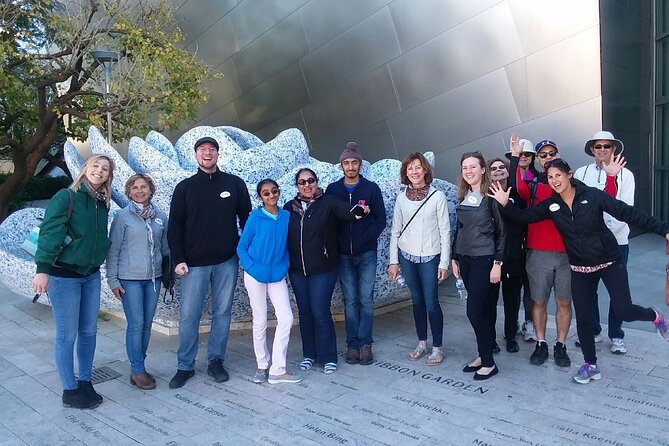
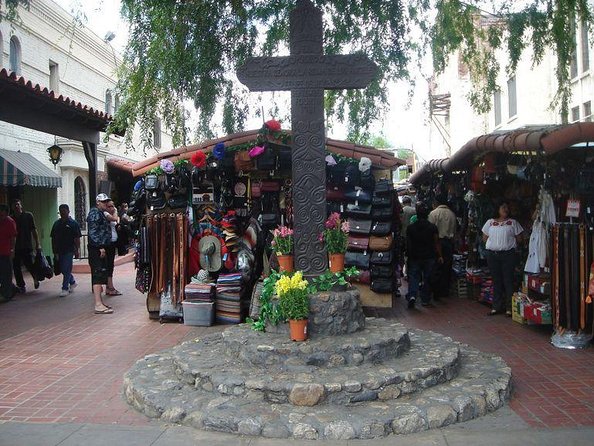
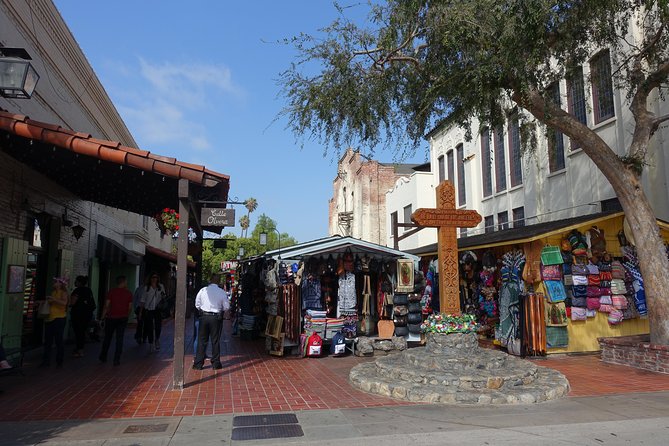
Next comes Calle Olvera, one of the most iconic “this is where it started” streets in the city. It’s a quick 15-minute stop focused on the historic character of the area—plus the practical fun of browsing souvenirs as you stroll.
This is one of those places where the setting does part of the explaining for you. When your guide ties the street to the city’s early beginnings, the timeline feels less like a list of dates and more like a real place where people still shop, snack, and wander.
Why this works for you: it’s easy to process. You’re not jumping between unrelated landmarks—you’re still moving forward in the story.
What to keep in mind: you’ll likely have more visual than “lecture” time here. If you want more time for browsing, plan to come back after the tour ends.
Old Church + Old Government: The Anchor Stops Most People Skip
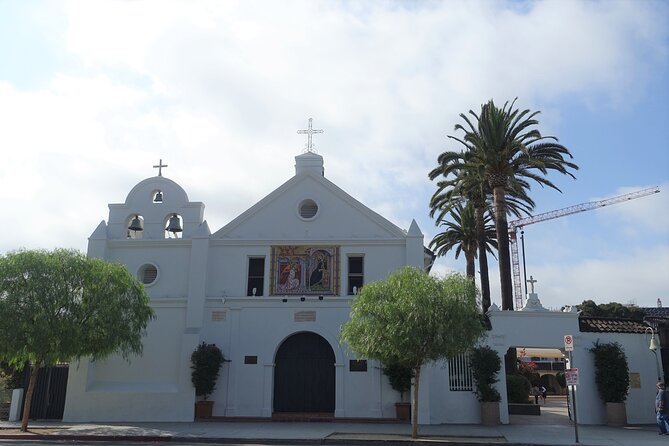
After Olvera Street, the tour heads to Our Lady Queen of Angels Catholic Church, described as L.A.’s oldest standing church. The stop is around 10 minutes, and it gives you a meaningful contrast to the busy commercial feel of the street before it.
Then you also pause at the oldest standing government building in the area (the exact building name isn’t listed in the tour details you’re given, but the stop itself is part of the route). Together, these stops create a useful idea: early L.A. wasn’t just churches and markets—it also had official structures shaping everyday life.
I like the pacing here. The tour doesn’t let you stay in one mood for too long. You get a religious landmark, then you pivot to government, then you move toward large civic architecture again.
Possible consideration: these pauses are brief, so bring a “quick look + story” mindset. If you want deep interior time, you’d handle that on your own afterward.
Cathedral to Grand Park: “Mother Church” and the Arts Centered Around You
At Cathedral of Our Lady of the Angels, the vibe changes again. This is the “mother church” of Los Angeles and noted as one of the largest Catholic churches in the world, with the stop running about 15 minutes.
From there, you move into Gloria Molina Grand Park, described as a center for arts and culture in Los Angeles (another 10-minute stop). This portion matters because it shows downtown’s shift: faith and founding era anchors give way to the civic spaces people use today for public life and culture.
Why Grand Park is more than a pretty break: it’s a signal. Downtown’s center of gravity has moved, and public gathering space is part of that story. You’re not just seeing landmarks—you’re seeing how the city wants to be used.
Good to know: the tour is a walking overview, so views are the star. You’ll get the big-picture context quickly, then you can decide later if any of these spaces deserve a longer visit.
Disney Concert Hall by Frank Gehry: Architecture You Can Actually See
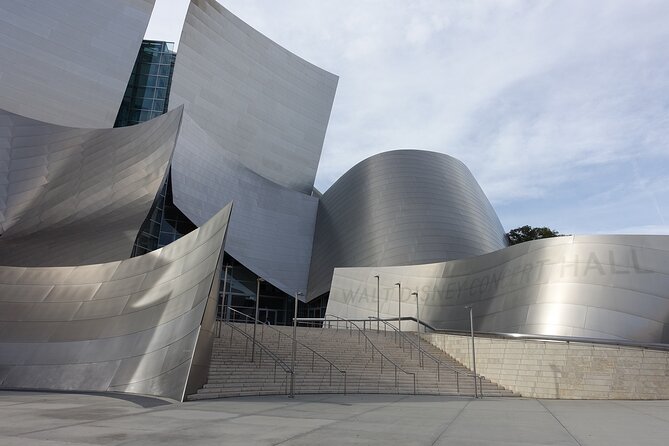
Next up is the Walt Disney Concert Hall, home of the Philharmonic and known for its Frank Gehry architecture. This stop is about 10 minutes, and it’s short by design—enough time to appreciate the shapes and understand why the building became such a downtown marker.
This is the point where the tour starts to feel like modern L.A. You’ve gone from mission roots and early institutions to a landmark that’s strongly tied to performance culture and architectural identity.
Why you’ll probably like it: it gives you something visual to anchor in your mind. Even if you don’t care about architecture, seeing a Gehry building in real scale helps the story stick.
Possible drawback: the stop is brief, so if you’re the type who likes detailed exterior photos from multiple angles, you may want to linger after the tour finishes this section.




The Broad and MOCA: Two Stops That Decide Your Extra-Ticket Budget
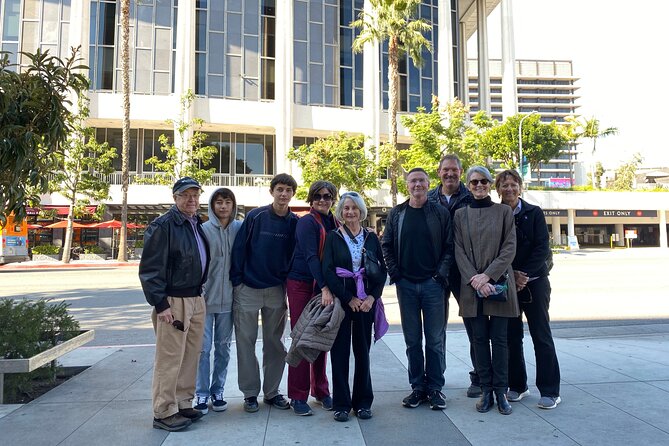
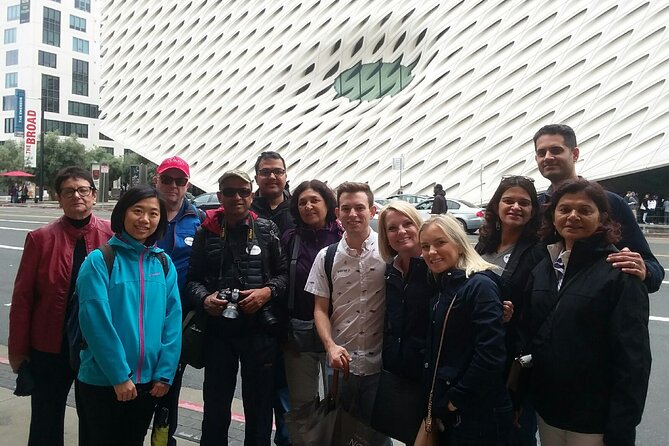
The tour includes quick looks at two major contemporary-art destinations: The Broad and The Museum of Contemporary Art (MOCA). Each is on the route with only about 5 minutes allocated, and the details you’re given clearly state admission is not included.
This is a great setup because it lets you decide with fresh eyes. You see the museum from the outside, you get the context from your guide, and then you choose whether the inside visit fits your time and wallet.
I like this approach because it avoids the classic problem of “tour includes a museum, but you’d rather spend the time elsewhere.” Here, you can add the museum experience only if it’s your thing.
Main consideration: if you’re hoping for fully guided museum time, this tour won’t give you that. These are more like quick introduction stops—excellent for orientation, not a substitute for a dedicated museum visit.
Ending at Angels Flight: Skyline Views and the Short Funicular Ride
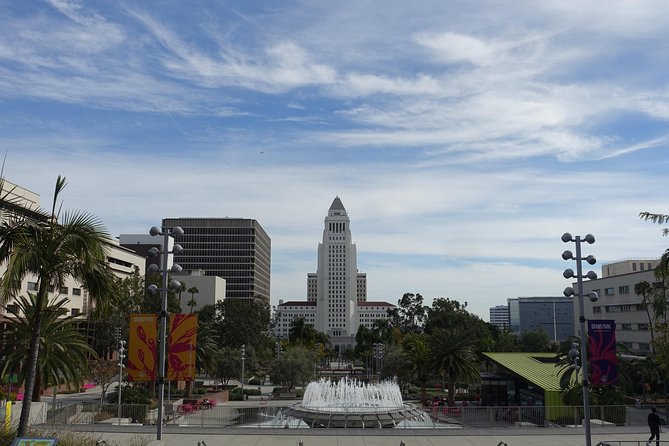
You finish at 351 S Hill St, at Angels Flight Railway. The stop is about 10 minutes and includes an overlook of the Los Angeles skyline plus the option to ride the funicular. The important detail: the ride fare is not included.
This ending works because it’s fun and it’s a viewpoint moment. You’ll get a sense of downtown’s position relative to the rest of the city, and it feels like a punctuation mark after several serious historic stops.
Getting back from the end: the tour ends here, and the details say it’s a 25-minute walk back to the start area or a two-stop Metro Rail ride (rail fare not included). The guide can point you in the right direction, which is a genuine plus when you’re trying not to overthink transportation.
Price and Value: Why $38 Can Be a Smart Downtown Buy
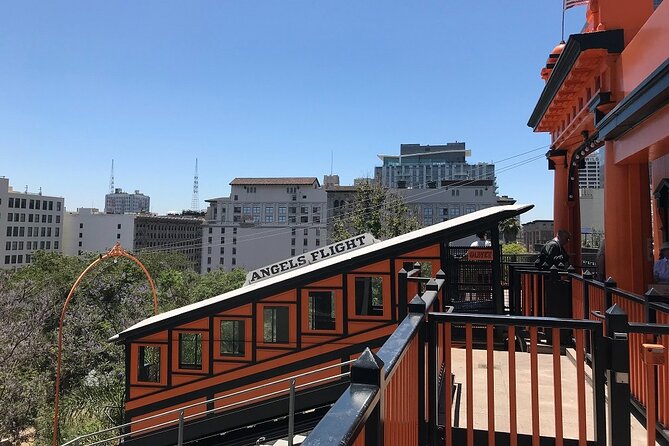
Let’s talk value in a way that’s actually useful. You’re paying $38 for a guided walking tour lasting about 2 hours with a maximum of 20 people. The biggest value isn’t that every stop requires paid admission—it’s the guide who connects all these places into one coherent story.
You’re also starting with several free-entry landmarks, like Union Station, Calle Olvera, and the major churches and park stops. That keeps spending under control while still covering iconic spots.
If you’re a first-timer, this tour acts like a downtown orientation map you can walk through. If you’re returning to L.A. and want to refine your route, it helps you pick which neighborhoods and buildings deserve your deeper attention later.
One practical note: the tour averages being booked about 11 days in advance, so if you have dates you can’t shift, it’s smart to lock it in earlier rather than later.
Weather, Timing, and What to Expect From a 2-Hour Walk
The tour requires good weather. If it’s canceled due to poor weather, you’re offered a different date or a full refund—so it’s not a take-your-chances situation.
In terms of timing, it’s set up as an easy-to-follow loop that fits into a half-day plan. You’ll move between landmarks that are close enough for walking pace, but not so far that you feel like you’re doing a long endurance hike.
Because the museum stops and the funicular ride aren’t included, you’ll want to decide early what you care about. If contemporary art and a funicular ride matter to you, budget a little extra. If not, you can still get plenty out of the historic and architectural story without paying again.
Who This Tour Fits Best (And Who Might Want Something Else)
This is ideal for first-time visitors to downtown L.A. who want the city’s origin story without spending hours reading guidebooks. It’s also a good fit if you like structure—having a guide steer you from one landmark to the next so you don’t waste time figuring out what’s worth seeing.
You might want a different type of tour if your top priority is hands-on museum time. The contemporary-art stops are brief and not ticketed, and the funicular ride costs extra.
That said, as an introduction, this tour does a lot right. The guide—Phil—clearly puts effort into making the history readable and answerable, and the pacing keeps the walking time feeling manageable.
Should You Book the Los Angeles Beginnings Walking Tour?
I’d book it if you want a smart, walkable overview that links downtown’s early institutions to the city’s modern cultural landmarks. With Phil leading, a small group size, and many stops that don’t require extra entry fees, it’s an efficient way to get oriented in downtown L.A. and leave with a clearer sense of where to go next.
If you’re the type who wants full museum visits included, you’ll likely feel the limits of a short tour and may end up paying separately. But if you’re okay treating The Broad, MOCA, and Angels Flight as optional add-ons, this walk is a strong way to start.
FAQ
How long is the Los Angeles Beginnings Walking Tour?
It lasts about 2 hours.
Where do I meet, and where does the tour end?
You start at 800 N Alameda St, Los Angeles, CA 90012, and the tour ends at 351 S Hill St, Los Angeles, CA 90013.
Is the fare for Angels Flight included?
No. The tour notes that the Angels Flight ride fare is not included.
Are museum tickets included for The Broad or MOCA?
No. The Broad and the Museum of Contemporary Art are listed as admission not included.
What if the weather is bad?
The tour requires good weather. If it’s canceled due to poor weather, you’ll be offered a different date or a full refund.
Can I get a full refund if I cancel?
Yes. You can cancel up to 24 hours in advance for a full refund.