REVIEW · LOS ANGELES
Los Angeles Chinatown and Little Tokyo Walking Tour
Book on Viator →Operated by LA Walking Tours · Bookable on Viator
Chinatown and Little Tokyo are close, yet feel worlds apart. This walking tour threads the story of Chinese and Japanese immigration through street-level sights, from gates in Chinatown to Japanese gardens in Little Tokyo. I especially like the local guide approach and the way the route gets you into the heart of both neighborhoods, not just quick photo stops, and I find it’s great for history-minded travelers who want context. One thing to watch: you’ll need to pay the Metro rail fare for the short ride between neighborhoods, since it’s not included.
What makes it work is the pace and focus. You’ll walk, pause, and listen long enough to understand why these places look the way they do now, and how policies and community life shape daily reality. I also like that the tour is built around specific landmarks and real institutions, so the history isn’t vague—it’s tied to places you can actually stand in front of.
The tour runs about two hours with a start time of 10:30 am, and it’s weather-dependent. If you’re the type who hates walking in heat or sun (or rain), plan to check the forecast and keep a flexible mindset.
In This Review
- Key things to know before you go
- A Chinatown and Little Tokyo walk that explains what you’re seeing
- Price and logistics: what $38 covers (and what it doesn’t)
- Where to start and where you end at Japanese American Cultural & Community Center
- Chinatown Plaza to East and West Gate: the story begins in the center of it all
- Blossom Plaza: a short pause that links Italian roots to L.A.’s immigrant waves
- The Metro rail hop: getting from Chinatown to Little Tokyo without losing the thread
- Japanese Village Plaza: the center of Little Tokyo life
- Japanese American Cultural & Community Center: Nisei festival grounds and Japanese gardens
- Guide quality and small group energy (max 20 travelers)
- What to bring for a 10:30 am walk that depends on good weather
- Who this tour is best for (and who should consider skipping)
- Should you book the Los Angeles Chinatown and Little Tokyo Walking Tour?
- FAQ
- How long is the Los Angeles Chinatown and Little Tokyo walking tour?
- What is the meeting point for the tour?
- Where does the tour end?
- Is the Metro rail fare included in the price?
- What’s included in the ticket price?
- What time does the tour start?
- How many people are in a group?
Key things to know before you go
- A local guide leads the full story, not a generic overview.
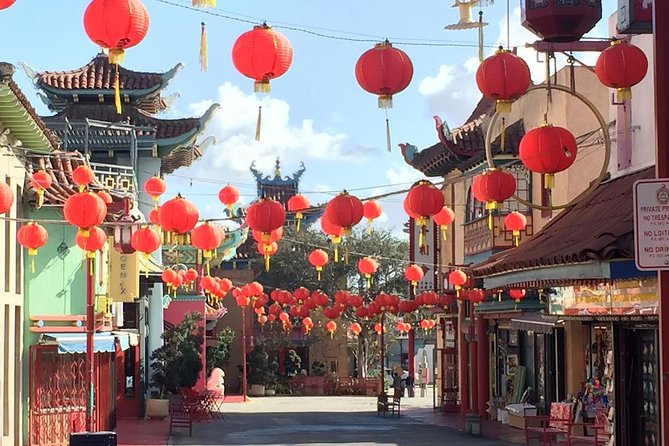
- Chinatown landmarks like the Chinatown Celestial Dragon, plus gates and well-known stops.
- Little Italy history at Blossom Plaza in a quick, easy pause.
- A practical Metro ride between neighborhoods, with added context while you’re on transit.
- Japanese Village Plaza and the Japanese American Cultural & Community Center anchor the Little Tokyo section.
A Chinatown and Little Tokyo walk that explains what you’re seeing
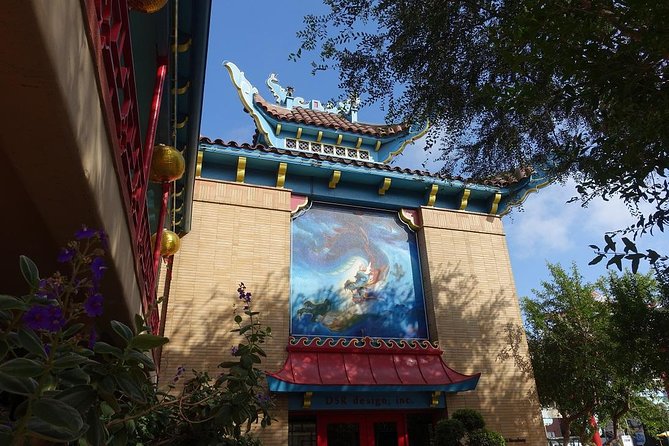
If you want L.A. to feel like a real city—where different communities shaped the streets—you’ll like this format. Instead of bouncing between random attractions, the tour uses a clear theme: how Chinese and Japanese immigrants built communities here, and how life continues today.
I like that the tour doesn’t treat Chinatown and Little Tokyo as museum sets. You’re guided through places that still function as community hubs, with history tied to everyday movement—shops, plazas, cultural spaces, and public landmarks.
You also get something rarer than “old photos” narration: you learn how current policies affect residents. That gives the stops more weight, because you can connect the past to what people experience now.
You can also read our reviews of more walking tours in Los Angeles


Price and logistics: what $38 covers (and what it doesn’t)
At $38 per person, this is a solid value for a guided, landmark-based walk. You’re paying for a local guide and a structured route that includes multiple stops on foot, plus time at key cultural locations.
What’s not included is the Metro rail fare for the short transfer between Chinatown and Little Tokyo. The tour handles the transit break for you, but you’ll still want to bring enough money or setup to cover the ride.
The tour is listed at about 2 hours, and the schedule is built in chunks (30 minutes, 4 minutes, then a rail segment, then two 15-minute blocks). That helps you stay focused. There’s less “drive-by sightseeing” and more “stand here, look around, understand why.”
Where to start and where you end at Japanese American Cultural & Community Center
You’ll start at 943 N Broadway, Los Angeles, CA 90012. The tour ends at 244 San Pedro St, Los Angeles, CA 90012, at the Japanese American Cultural & Community Center.
Here’s a practical tip: plan your next step around that ending point. The tour notes that it’s a two-stop Metro Rail ride back to the starting area, but since rail fare isn’t included, you’ll still need to account for your travel cost and time.
That end location is also a feature, not a drawback. You’ll finish at a cultural center rather than at a random street corner, so the last stop feels like a payoff.
Chinatown Plaza to East and West Gate: the story begins in the center of it all
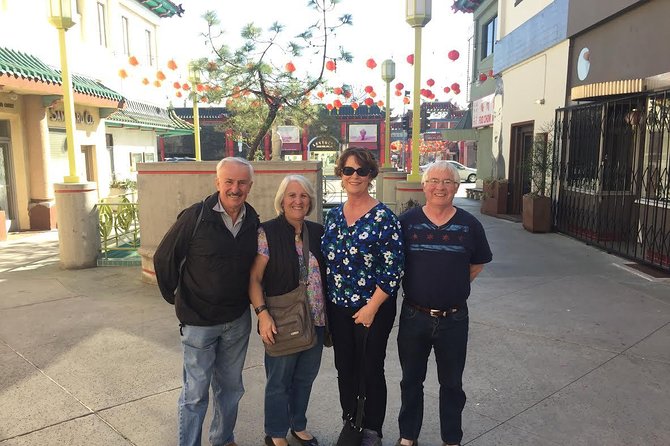
Chinatown is where the tour sets its tone, and it does it with clear, walkable checkpoints. You spend about 30 minutes in this first section, starting around Chinatown Plaza and moving past major landmarks.
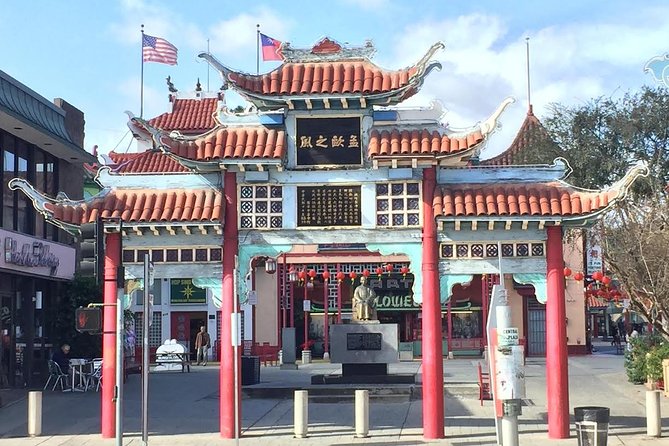
Expect stops connected to what people think of when they picture L.A. Chinatown, like the Chinatown Celestial Dragon and the East and West Gate. These aren’t just decorative. They’re part of how the neighborhood announces itself and how community identity shows up in the built environment.
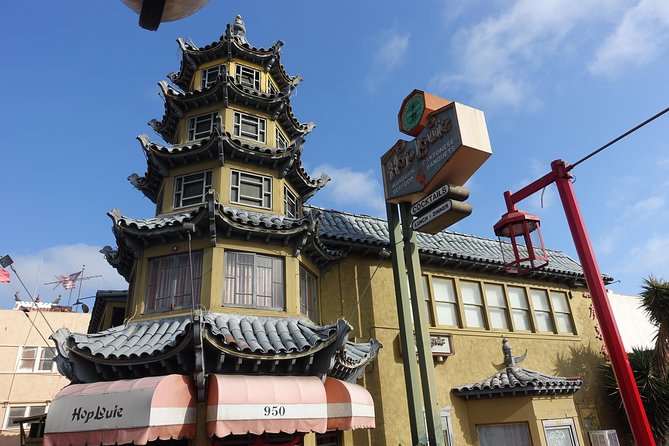
You’ll also get guided time at a few specific local stops, including Hop Louie restaurant and Wonder Bakery. Even if you don’t buy anything, these are the kind of places that make a Chinatown walk feel real, not staged. The tour also includes a movie location site and artwork by Tyrus Wong.
That Tyrus Wong stop is especially worth your attention. Public art can be a fast way to understand how a neighborhood’s imagination and cultural identity have been expressed in the city. If you like street art and public murals, don’t rush through this portion.
Potential drawback here: this is the longest continuous walking block (the Chinatown time is 30 minutes). If you’re prone to sore feet or you’re traveling with mobility limits, go slow, wear supportive shoes, and build in a little buffer for standing and reading.
Blossom Plaza: a short pause that links Italian roots to L.A.’s immigrant waves
After Chinatown, the tour makes a quick stop at Blossom Plaza for about 4 minutes. This part centers on LA’s old Little Italy and Italian history.
Even with such a short time allocation, I like this stop because it widens the story without derailing the day. It reminds you that L.A. immigration history isn’t just one arc; it’s layered neighborhoods, changing ownership, and shifting community footprints.
If you’re a traveler who enjoys “context stops” (the ones that add meaning without taking over your whole schedule), Blossom Plaza hits the right note. If you prefer only major cultural sites, this one will feel brief—but it’s designed to keep you moving.





The Metro rail hop: getting from Chinatown to Little Tokyo without losing the thread
Between neighborhoods, you’ll take the Metro rail. This segment runs around 10 minutes, and the tour specifically builds in interpretation while you’re traveling.
Two things are called out during the ride: the history of Little Tokyo and Japanese Americans, and religions of the Japanese people. That matters because it turns transit time into learning time. You’re not just crossing town; you’re being guided through themes that will show up again at the next stops.
The rail fare is not included, so it’s smart to plan ahead. Also, if you get motion sickness easily or hate crowded transit, take that into account. This is short, but it is still a transit ride.
Japanese Village Plaza: the center of Little Tokyo life
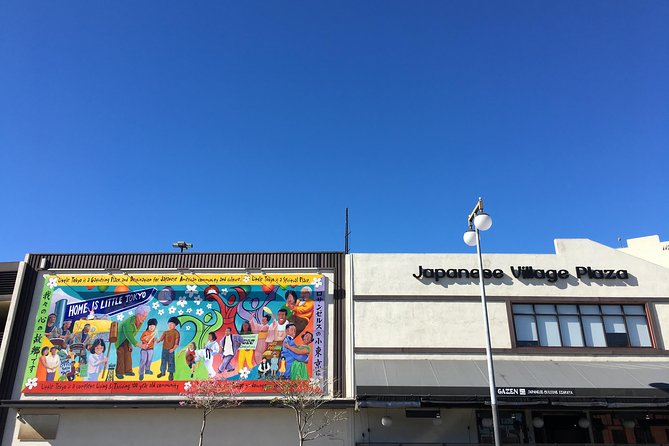
Your next walking block takes you to Japanese Village Plaza, with about 15 minutes here. This is described as the center of Little Tokyo, and it’s the kind of place where you can sense why this neighborhood became a focal point for Japanese American community life.
From a travel-value perspective, this stop acts like a bridge. Chinatown’s story has strong “identity landmarks,” and Little Tokyo’s story then moves toward community spaces and cultural expression. Japanese Village Plaza helps you shift gears into the next theme.
If you enjoy seeing how neighborhoods are organized around communal gathering spots, this is the area to watch. Look at how people move through the space, how the plaza frames the street edges, and how the layout signals what matters locally.
Japanese American Cultural & Community Center: Nisei festival grounds and Japanese gardens
The final stop is about 15 minutes at the Japanese American Cultural & Community Center (244 San Pedro St). This is one of those places that makes a walking tour feel like it ends at something meaningful, not just a last address.
You’ll learn about the center as home of the Nisei festival, and you’ll also be pointed toward its Japanese gardens. Even if you’re not spending extra time after the tour, being guided here gives you a better sense of what the neighborhood protects and celebrates.
This ending location also helps with planning. Since the tour ends here, you can decide whether you want to continue exploring nearby streets or simply use it as your jump-off point for the Metro ride back.
One consideration: if you’re hoping for lots of time inside buildings, this tour keeps a steady pace. The center time is 15 minutes, so come ready to look, absorb, and then decide if you want to linger after the tour ends.
Guide quality and small group energy (max 20 travelers)
This tour runs with a maximum of 20 travelers, which matters more than it sounds. Smaller groups make it easier for a guide to manage questions, keep you together, and adjust explanations when people lean in.
The standout, based on what the guide names have been praised for, is clarity and patience. Guides such as Chris and Robert have been singled out for being informative and for taking the time to explain history at each stop. That’s exactly what you want on a tour where the “why” behind landmarks is the main attraction.
If you’re the kind of traveler who asks follow-up questions when something catches your eye, a group cap like this is a good sign.
What to bring for a 10:30 am walk that depends on good weather
Because the tour requires good weather, I recommend you pack like you’ll be outside for close to two hours. Wear shoes you can stand and walk in without thinking.
A small practical approach helps:
- Bring water, especially if you’ll start in warm morning sun.
- Keep your phone charged for the mobile ticket.
- If you’re planning photos, use the time windows at plazas and gates for your best shots, since the longer stops are the ones that give you breathing room.
Also, remember you’ll do a short Metro ride. Having your payment method ready before you’re on the platform helps the day feel smooth.
Who this tour is best for (and who should consider skipping)
This is a great fit if you want a guided Los Angeles Chinatown walking tour that connects history to place. It works well for travelers who like neighborhoods, community institutions, and a route with real landmarks rather than vague “area overview.”
It’s also a smart choice if you care about how immigration stories continue to shape daily life. The tour’s inclusion of how current policies affect residents makes it more than a nostalgia walk.
I’d think twice if you:
- Hate transit rides (even short ones), since you’ll take Metro and pay the fare.
- Dislike walking in any kind of weather—because the tour is weather-dependent.
- Prefer long time inside museums or buildings, since the format is stop-based and keeps moving.
Should you book the Los Angeles Chinatown and Little Tokyo Walking Tour?
Book it if you want a guided, structured walk through two of L.A.’s most important ethnic neighborhoods—built around specific landmarks, a local guide, and a smart use of time that includes a Metro rail hop. The price feels fair for a guided route with multiple cultural stops and a well-timed finish at the Japanese American Cultural & Community Center.
Skip it if paying the extra Metro fare and dealing with weather-dependent outdoor time will ruin your day. If you’re flexible and you like learning by looking at the streets, this one is a strong way to understand Chinatown and Little Tokyo without spending your whole trip in a car.
FAQ
How long is the Los Angeles Chinatown and Little Tokyo walking tour?
The tour is about 2 hours.
What is the meeting point for the tour?
The tour starts at 943 N Broadway, Los Angeles, CA 90012.
Where does the tour end?
The tour ends at 244 San Pedro St, Los Angeles, CA 90012, at the Japanese American Cultural & Community Center.
Is the Metro rail fare included in the price?
No. The tour includes a short rail journey, but the Metro rail fare is not included. The guide can help with acquisition during the tour.
What’s included in the ticket price?
A local guide is included, along with a walking tour through Chinatown and Little Tokyo stops.
What time does the tour start?
The start time is 10:30 am.
How many people are in a group?
The tour has a maximum of 20 travelers.