REVIEW · LOS ANGELES
LA’s Art Deco & Beaux Art Architecture: Private Walking Tour
Book on Viator →Operated by Travel Curious · Bookable on Viator
Downtown LA turns into a photo set. This private 3-hour tour threads together City Hall, the Bradbury Building, and the Eastern Columbia clock tower with your guide steering you through downtown. I especially love how the route is built around free stops and photography time, and I also like that you don’t have to plan the turns yourself. One thing to keep in mind: you’ll be walking at a steady pace on sidewalks, so comfortable shoes matter.
The mix is the whole point. You’ll see how Beaux-Arts grandeur and Art Deco’s vertical lines show up in real buildings you can still stand in front of, not just in textbooks. Your guide navigates for you and points out what to look for, including film-friendly spots and architectural details most people miss.
If you’re lucky, you’ll get an extra wow moment. In one group, the guide named Sam added a surprise rooftop viewing, which made for an unforgettable photo break. That kind of bonus depends on timing and access, but the tour’s core experience stays strong either way.
In This Review
- Key highlights worth your attention
- LA’s Art Deco and Beaux-Arts look different on purpose
- Price and what you get for $175
- Before you start: timing, mobility, and how the route feels
- Stop-by-stop: City Hall to Eastern Columbia
- Stop 1: Los Angeles City Hall (and the Art Moderne Courthouse vibe)
- Stop 2: The Bradbury Building (one of LA’s oldest Beau-Arts survivors)
- Stop 3: Title Guarantee Building Apartments (Art Deco vertical energy)
- Stop 4: Pershing Square (how styles set up what comes after)
- Stop 5: The CalEdison (marble-floor potential, depending on access)
- Stop 6: Los Angeles Central Library (saved from demolition)
- Stop 7: Oviatt Building (Romanesque roots, Art Deco remake)
- Stop 8: Eastern Columbia Lofts (clock tower, terra cotta, and a famous owner)
- How to tell Art Deco from Beaux-Arts without overthinking it
- Photo strategy: get the shot and still enjoy the walk
- Who should book this private architecture tour
- Should you book LA’s Art Deco & Beaux-Arts walking tour?
- FAQ
- How long is the LA Art Deco & Beaux-Art Architecture private walking tour?
- Where does the tour start and end?
- Is the tour private?
- Is it wheelchair accessible?
- Do I need to buy tickets for the stops?
- Is food or drink included?
- What is included in the price?
- What language is the tour offered in?
- Is there a cancellation policy?
Key highlights worth your attention
- Private group format with a dedicated guide and your own pace
- Three hours planned for photos, not a rushed checklist
- Free, no-ticket stops from Los Angeles City Hall to Eastern Columbia Lofts
- Downtown navigation handled for you, so you can focus on details
- Wheelchair accessible and close to public transportation
- Art Deco and Beaux-Arts clues you’ll learn to spot quickly on the street
LA’s Art Deco and Beaux-Arts look different on purpose
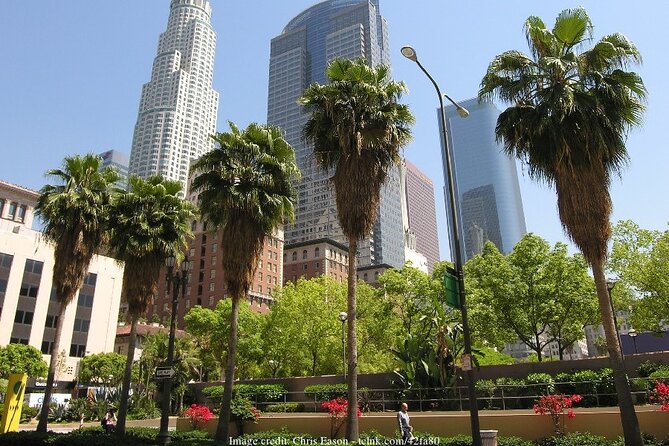
Downtown LA is a stacked timeline. In a short walk, you’ll see buildings that carry the confidence of the early 1900s—then watch the style shift toward the sleek geometry of Art Deco.
Beaux-Arts shows up as formality: big massing, grand symmetry, and a sense that the building is meant to impress you from across the street. Art Deco is more streamlined. Think vertical emphasis, bold decorative motifs, and that slightly theatrical look—often designed to photograph well.
What makes this tour smart is that it doesn’t treat these styles like trivia. You’ll learn what to notice: materials, proportions, and why certain buildings were remodeled or repurposed instead of demolished. In this part of LA, the architecture tells you how the city wanted to present itself.
You can also read our reviews of more walking tours in Los Angeles


Price and what you get for $175
At $175 per person for about three hours, this is a mid-range choice. The value comes from the “guided + private” part, plus the fact that the stops don’t require paid admissions.
You also get something you can’t easily recreate on your own: a guide who can connect the dots between buildings. For example, the tour doesn’t just say this is Art Deco—it explains how earlier styles set the stage, then how later builders adapted themes for the next era.
Another detail that affects value: the schedule gives you real time to take photos. If you’ve ever done a sightseeing walk where you’re constantly hustled, this one feels calmer. And because it’s private, you can slow down when a façade catches your eye.
One small caveat: food isn’t included. If you want a full day downtown, plan a market stop or a quick bite before or after the tour.
Before you start: timing, mobility, and how the route feels
Plan on three hours total, with short stops at each highlight. It’s not a slow stroll with long sit-down breaks, but it also isn’t frantic. You’ll move between downtown landmarks and pause long enough to look closely and get decent photos.
The good news is the tour is wheelchair accessible and near public transportation. Still, it’s downtown: expect curb cuts, busy intersections, and sidewalks where you’ll want to watch your footing.
Bring a camera (or phone) and get ready for details at eye level. Some of the best “wow” moments here are in stonework, vertical lines, and corner treatments—things you’ll miss if you keep your head up only for the skyline.
Also note the tour language is English, and you’ll get a mobile ticket. If you’re booking ahead, it’s often reserved about two months in advance, so locking in your date early is wise.
Stop-by-stop: City Hall to Eastern Columbia
You’ll start at Los Angeles City Hall and finish at Eastern Columbia Lofts, with your guide helping you understand what you’re seeing and where to look next.
Stop 1: Los Angeles City Hall (and the Art Moderne Courthouse vibe)
You begin at Los Angeles City Hall at 200 N Spring St. It’s an iconic building that’s shown up in the films industry more than once, which means it has that recognizable, screen-ready style.
Your guide then points you toward the LA Courthouse area, including an Art Moderne example. The Courthouse angle matters because it shows the transition between older formal styles and the cleaner, more streamlined look that comes next.
Why this stop works: City Hall gives you a big anchor. Once you’ve got that scale in your head, the next stops make more sense as variations on the same theme: power, style, and visibility.
You can also read our reviews of more private tours in Los Angeles



Stop 2: The Bradbury Building (one of LA’s oldest Beau-Arts survivors)
Next up is the Bradbury Building, a well-known downtown landmark and one of the oldest surviving Beau-Arts architecture buildings in the area.
This is a perfect pause if you like classic design that still feels alive. Even if you’re mostly viewing from outside, the building’s presence helps you understand why Beaux-Arts earned its reputation for grandeur.
A practical tip: take a step back and then move closer. From farther away, you’ll read the building’s overall massing. Up close, you can spot the decorative rhythm that makes it feel intentional instead of generic.
Stop 3: Title Guarantee Building Apartments (Art Deco vertical energy)
At the Title Guarantee Building you’ll see Art Deco ideas focused through verticality. The building dates from 1930 and is now loft-style apartments, so you get a real example of how these historic exteriors survive by changing inside uses.
This stop is quick, but it’s useful. Art Deco often isn’t just about ornament—it’s about the lines that make buildings look taller and sharper. When your guide highlights how the façades are shaped, you start seeing the style pattern across multiple corners.
Drawback here: since it’s a shorter stop, you’ll want to come prepared to photograph fast. If your group tends to linger, ask your guide where the best angles are first.
Stop 4: Pershing Square (how styles set up what comes after)
Pershing Square is your style crossroads. You’ll explore how Art Deco and Beaux-Arts that came before the peak era influenced what followed, and you’ll get an example of a 1925 Biltmore Hotel reference.
This is an interpretive stop, not just a “look at the building” stop. Your guide helps you connect the dots between eras, so you understand why a specific design choice matters instead of just memorizing dates.
If you like learning on your feet, this is one of the most satisfying parts of the walk.
Stop 5: The CalEdison (marble-floor potential, depending on access)
The CalEdison building dates to 1931 and sits prominently on a corner. It’s a great “photo intersection” stop, because corner buildings in this style usually have strong angles and a deliberate façade hierarchy.
The tour notes that you might be able to enter and see spectacular types of marble on the floor and columns, depending on what’s open that day. Even if you can’t get inside, your guide can still help you read the material language that makes the building feel special.
Best move: look for how the columns and floor treatments visually guide your eye. Art Deco often uses strong interior/exterior cues to make the architecture feel cohesive.
Stop 6: Los Angeles Central Library (saved from demolition)
The Los Angeles Central Library from 1926 is an early Art Deco example that was saved from demolition in 1978 by the Los Angeles Conservatory. That’s a big piece of context, because it shows how style isn’t just aesthetic—it can be fight-worthy.
This stop also gives you a sense of continuity. Libraries are meant for gathering and civic identity, so the architecture has a public-facing job. Art Deco here isn’t only about trend; it’s about making knowledge feel permanent.
If you like meaning behind the bricks, take your time on this one. Even short exterior views feel richer when you know the building’s survival story.
Stop 7: Oviatt Building (Romanesque roots, Art Deco remake)
The Oviatt Building has a split personality in a good way. Parts were originally built in Romanesque Revival style, and later were changed to resemble Art Deco after the owner visited the Paris exposition in 1925.
This stop is valuable because it teaches you that buildings can evolve. Architecture isn’t always a clean timeline. Sometimes it’s a remix.
Your guide also passes by PacMutual original from 1908, which resembles a Greek temple and was remodeled in the 1930s to give it an Art Deco look. That pairing helps you compare the “classical base” versus the “modern face” concept in real LA form.
Stop 8: Eastern Columbia Lofts (clock tower, terra cotta, and a famous owner)
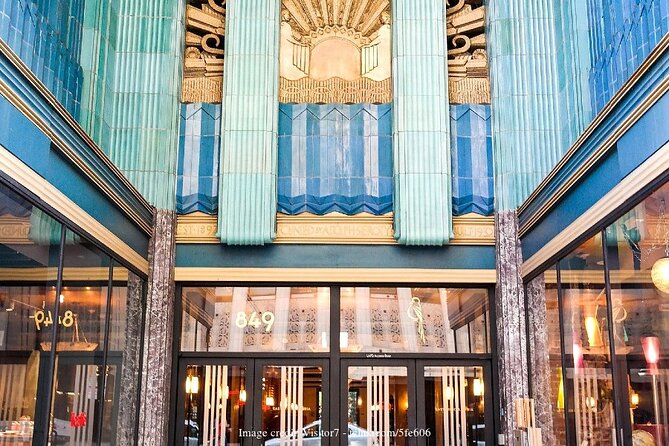
You finish at the Eastern Columbia Building at 849 S Broadway. The landmark has the iconic clock tower and greenish terra cotta, and it began life as a department store. Today it’s in use as luxury condominiums, with one unit still owned by Johnny Depp.
This ending stop lands because it’s dramatic. The building reads well from a few angles, and the clock-tower silhouette makes for easy photos.
Also, the finish point is close to public transport and taxi links. Your guide can advise you on the simplest way to get going after the walk.
How to tell Art Deco from Beaux-Arts without overthinking it
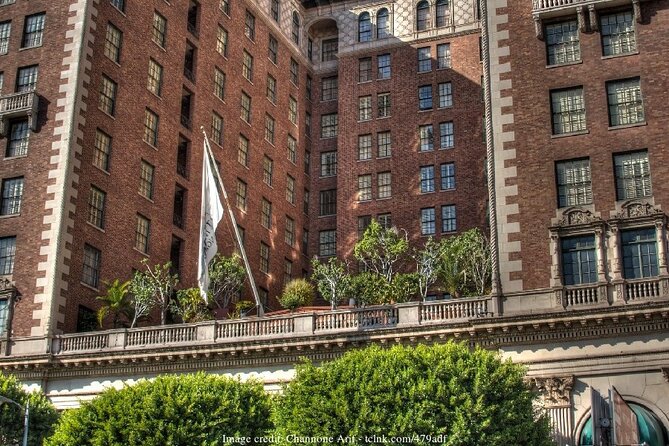
Once you pick up a few visual cues, downtown becomes a style game you can play with your camera.
Here’s the simple version you can use on the sidewalk:
- Beaux-Arts often feels formal and heavy, with grand “civic” proportions and a classic sense of order.
- Art Deco tends to feel taller and sharper, with strong vertical lines and a more geometric decorative rhythm.
Watch for how corners are treated. Beaux-Arts buildings often present a balanced front, while Art Deco buildings frequently emphasize angles and height. If you remember that, your photos will start to look more intentional too, because you’ll frame the buildings around the right design feature.
And because your guide helps you compare what came before and what followed, you’ll stop treating these styles as separate categories. You’ll see them as a shift in how LA wanted to look—cleaner lines, newer ambition, and better visibility on busy streets.
Photo strategy: get the shot and still enjoy the walk
You’ll have time to take photos at each stop, which is the real luxury here. The guide navigates, so you’re not constantly checking your phone map while trying to frame a façade.
A few practical tips that match how the tour is paced:
- Start each stop by doing a slow scan for symmetry (useful for Beaux-Arts) or vertical emphasis (often Art Deco).
- Take one photo from across the street first, then move in for details.
- If the building is at a corner, walk a few steps along the adjacent street. Corners often hold the best line-of-sight.
Also, if the day allows it, ask your guide whether there’s an extra elevated photo angle. In one group experience, there was a surprise rooftop viewing that made a big difference. You can’t count on every bonus, but it’s worth asking what’s possible when you’re already there.
Who should book this private architecture tour
This tour is a strong fit if you:
- Love architecture and want an easy way to understand Art Deco vs Beaux-Arts
- Want a guided route through downtown without planning every turn
- Prefer a private group experience where you can slow down for photos
- Are comfortable with moderate walking and you’d like wheelchair access
It’s also great for first-time LA planners who don’t want to waste half a day figuring out where the buildings are. Starting at City Hall and ending at Eastern Columbia makes the route feel linear and logical.
If you’re not that into architecture, you may still enjoy it, but you’ll get more from it if you’re the type who pauses for details. This is a “look up and read the building” tour, not a bus ride where you just look out the window.
Should you book LA’s Art Deco & Beaux-Arts walking tour?
Book it if you want a guided, photo-friendly introduction to downtown LA’s classic styles—and you’re willing to walk for about three hours. The value is strongest for people who enjoy architecture interpretation, because the tour connects the styles to each other and to real buildings that still stand today.
Skip it (or consider another option) if your top priority is long interior museum time. The tour is built around landmark viewing and street-level photography, with any interior access—like the CalEdison marble floor—being dependent on what’s available that day.
If you’re in town during a good-weather window, this one can feel like turning a normal downtown afternoon into an easy, memorable architecture lesson you’ll actually remember.
FAQ
How long is the LA Art Deco & Beaux-Art Architecture private walking tour?
It’s about 3 hours total.
Where does the tour start and end?
It starts at Los Angeles City Hall, 200 N Spring St, Los Angeles, CA 90012, and ends at Eastern Columbia Lofts, 849 S Broadway, Los Angeles, CA 90014.
Is the tour private?
Yes. It’s a private tour/activity, and only your group participates.
Is it wheelchair accessible?
Yes, it is listed as wheelchair accessible and near public transportation.
Do I need to buy tickets for the stops?
No tickets are required. The tour notes free admission at the listed stops.
Is food or drink included?
No. Food and drink aren’t included.
What is included in the price?
A friendly, professional tour guide for your own private group, plus plenty of time to take photos of your favorite places.
What language is the tour offered in?
The tour is offered in English.
Is there a cancellation policy?
Yes. There’s free cancellation up to 24 hours in advance for a full refund, based on local time.