REVIEW · LOS ANGELES
Historic Hollywood Boulevard and Movie Palaces Walking Tour
Book on GetYourGuide →Operated by Touch Down in LA · Bookable on GetYourGuide
Hollywood looks different on foot. This walking tour strings together the big-name sights of Hollywood Boulevard while giving you the stories behind the signs, stars, and movie palaces.
I really like the way the tour starts with the Hollywood Sign viewpoints, then moves into the Walk of Fame area while everything is explained clearly. You’ll also get time for questions in an intimate group, not a lecture you can’t interrupt.
The main drawback: it’s a full 150 minutes of walking in the middle of a busy district. If you’re not into that pace, plan on comfortable shoes and a slower day afterward.
In This Review
- Key things you’ll notice on this tour
- Getting to 6815 Hollywood Blvd and staying comfortable for 150 minutes
- Hollywood Sign panoramas: Hollywoodland’s comeback story
- Ovation Hollywood to Hollywood Boulevard: how a theater street changed
- Hollywood Walk of Fame: stars, categories, and how to read the sidewalk
- Grauman’s Egyptian Theatre: 1927’s tradition still hits hard
- Dolby Theatre: the modern face of a classic street
- TCL Chinese Theatre: guided time for the handprints-and-footprints experience
- Hollywood Roosevelt Hotel: Spanish Colonial Revival glamour and Oscars history
- Musso & Frank Grill: food history that shaped Hollywood’s myth
- Price and time: does $35 feel like value?
- Guides matter: Éloi’s humor and Mark’s behind-the-scenes angle
- So, who is this walking tour best for?
- Should you book Historic Hollywood Boulevard and Movie Palaces?
- FAQ
- What is the meeting point for the tour?
- How long is the Historic Hollywood Boulevard and Movie Palaces Walking Tour?
- How much does it cost per person?
- What languages are the guided tours offered in?
- What should I wear or bring?
- What are the main sights on the route?
- Is it easy to change plans if needed?
Key things you’ll notice on this tour
- Hollywood Sign backstory: Hollywoodland (1923), near-demolition fears, and restoration efforts linked to Alice Cooper and Hugh Hefner
- Walk of Fame context: why it started in 1960 and how it honors more than movie stars
- Movie-palace details at TCL Chinese Theatre: celebrity handprints and footprints made famous since 1927
- The Boulevard’s theater evolution: how Hollywood Boulevard became the theater district it’s known for today
- Old-school glamour at the Roosevelt Hotel: including Hollywood’s first Academy Awards ceremony
Getting to 6815 Hollywood Blvd and staying comfortable for 150 minutes
This tour meets at 6815 Hollywood Blvd, but the practical meeting spot is in front of the elevator at the entrance of the Metro Station Hollywood/Highland on Hollywood Boulevard. Show up about 15 minutes early so you’re not chasing the group once the walk gets going.
The duration is 150 minutes, and it’s a true walking experience. You’ll move between multiple landmarks, including the Hollywood Walk of Fame and more than one historic theater. The basics really matter here: wear comfortable shoes, check the weather forecast, and bring a camera because you’ll want pictures at the main stops.
Also note the tour runs with a live guide in English or French, and private group options are available. That’s helpful if you prefer a smaller, quieter pace.
You can also read our reviews of more walking tours in Los Angeles


Hollywood Sign panoramas: Hollywoodland’s comeback story
You begin with wide views over the Hollywood Sign, before the tour heads into the denser sights along the Boulevard. This is one of those moments where your photos actually make sense, because you get the context first.
The tour shares how the sign started in 1923 as Hollywoodland, not the final version most people imagine. You’ll also hear about the years when it faced near-demolition, and how restoration came together thanks to notable supporters like Alice Cooper and Hugh Hefner.
Why this start works: it gives you a mental map before you start reading names and dates on sidewalks. You’ll understand why people treat the Sign like Hollywood’s opening scene.
Practical tip: if you care about photos, look for a spot that gives you both the sign and the surrounding hillside/streets in-frame, then let the guide’s talking points be your timing cue.
Ovation Hollywood to Hollywood Boulevard: how a theater street changed
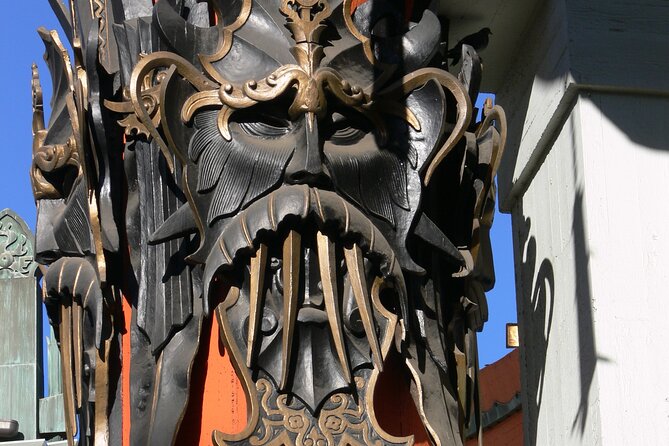
Once you’re moving along, the focus turns to Hollywood Boulevard and how it evolved from a quieter street into the theater district people associate with old Hollywood.
On this stretch, the tour connects architecture and entertainment history. You’re not just looking at storefronts—you’re learning how the area shifted during boom periods and revitalizations, which helps the buildings make sense instead of feeling like random blocks of landmarks.
A fun part of this section is how the guide points out what to notice beyond the obvious. Historic theaters in the area are part of the story, including references to the Grauman’s Egyptian Theatre, which the tour highlights as a Hollywood landmark that hosted Hollywood’s first red carpet.
Also, there’s a stop at Ovation, Hollywood during the walk. Even if you’re not there for shopping or modern venues, it’s useful as a transition point—like a reminder that Hollywood keeps changing while still trading on its past.
Hollywood Walk of Fame: stars, categories, and how to read the sidewalk
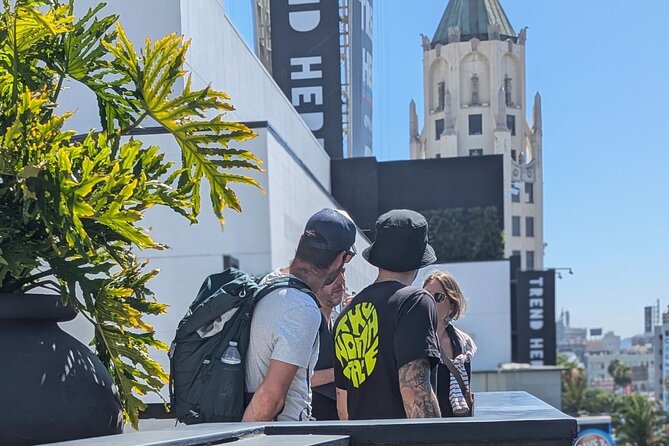
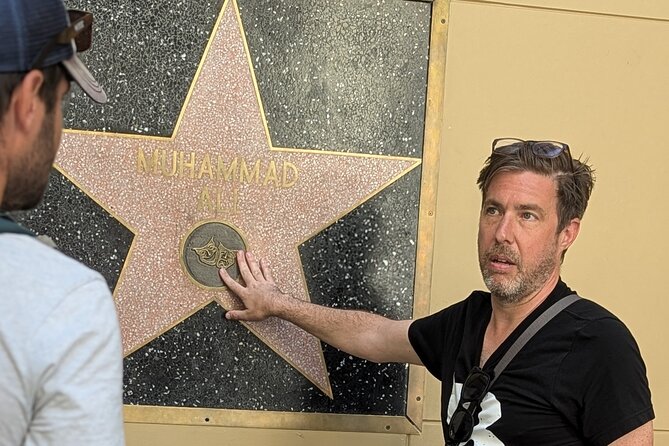
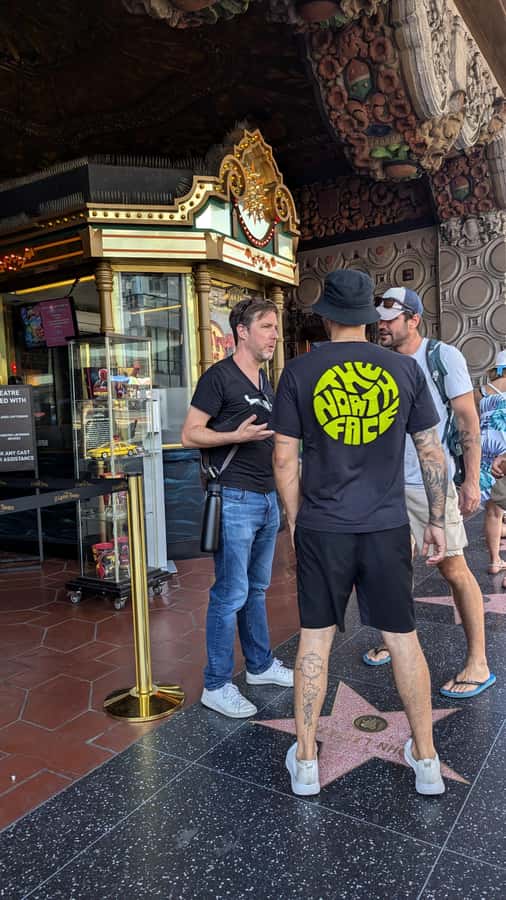
A major highlight is the Hollywood Walk of Fame. You’ll get a guided walk, with the origins explained and specific facts you can use to make sense of what you’re seeing.
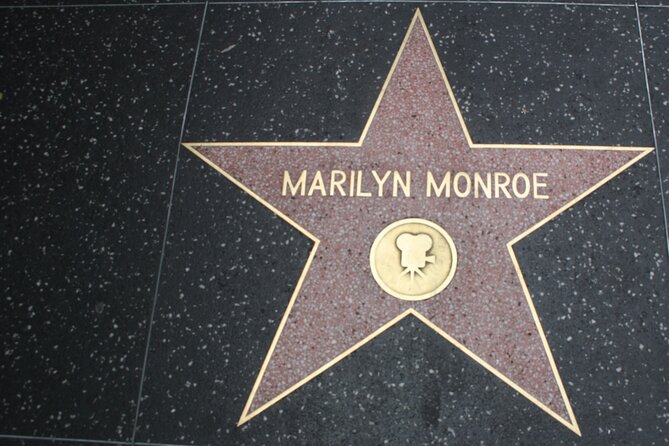
The Walk of Fame traces back to 1960, and you’ll learn that the collection isn’t only about classic movie acting. It includes musicians, radio personalities, and even fictional characters such as Mickey Mouse and Godzilla.
Here’s what I like about this stop for practical sightseeing: instead of trying to scan every star (which is impossible), you’ll learn how the system works so you can spot patterns. Once you understand that, the sidewalk becomes a timeline rather than a blur of names.
Time on this segment is short—about 10 minutes—so your best move is to decide in advance what you care about. Pick a few: movie icons, music, or the quirky fictional names. That way, the guide can lead you to meaningful hits rather than taking you on a random stroll.
Grauman’s Egyptian Theatre: 1927’s tradition still hits hard
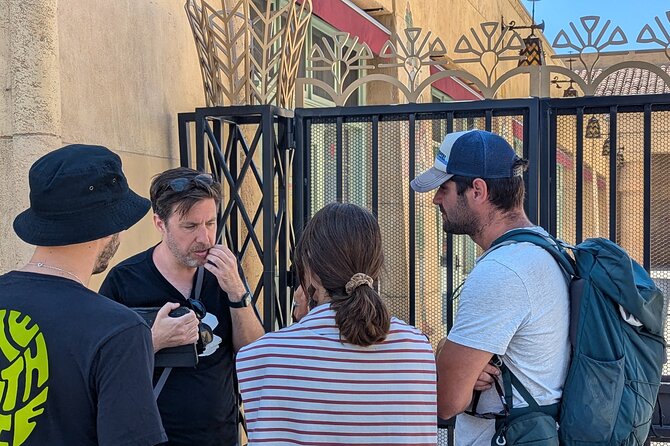
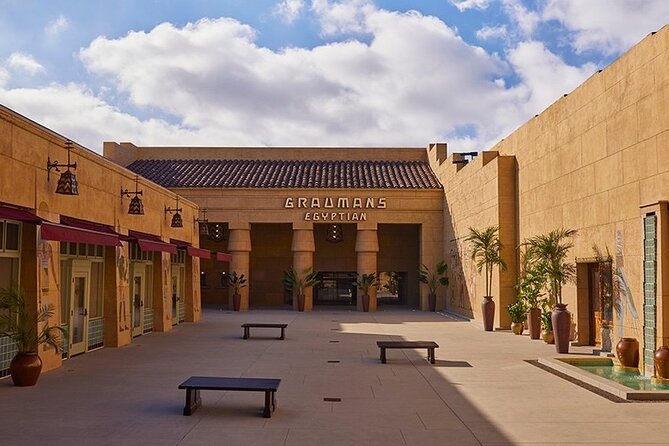
Next up is Grauman’s Egyptian Theatre for sightseeing time. The key payoff here is learning why this theater matters beyond being famous.
The tour frames the theater as a landmark since 1927, and it connects it to a tradition that’s easy to miss unless someone explains it: celebrity handprints and footprints in cement. The idea became a signature movie-palace detail, the kind that turns a building into a real place fans can touch with their own eyes.
You’ll also hear examples of celebrity marks tied to the tour’s story—like Marilyn Monroe, Harrison Ford, and even R2-D2. That mix of human legends and pop-culture icons is part of Hollywood’s appeal: it treats the screen as a shared myth system.
What to do with this stop: pause around the areas where the cement marks are most visible, and use your camera at shoulder height. It’s much easier to frame the details than to rush and grab a blurry souvenir.
You can also read our reviews of more historical tours in Los Angeles





Dolby Theatre: the modern face of a classic street
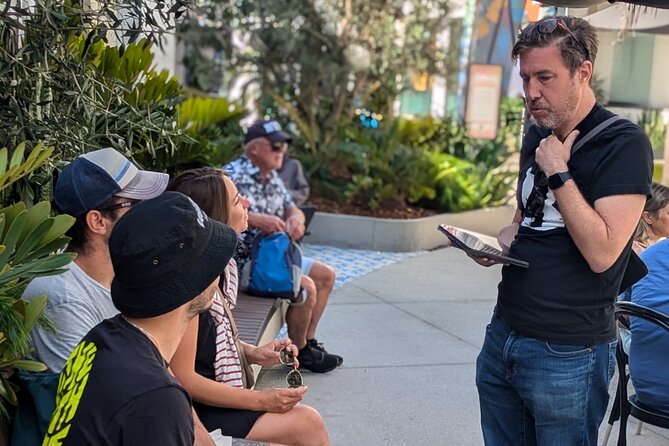
The itinerary includes a Dolby Theatre visit, with time built in for a look and guide commentary (about 15 minutes).
Even without going deep on specifics, this stop helps you understand that Hollywood’s movie-palace identity didn’t end decades ago. It’s still a functioning entertainment machine, not just a museum street. The guide’s role matters here because the architecture can be obvious while the meaning takes a little interpretation.
If you like understanding what you’re seeing, this stop is a good bridge between the older-world legends and the current era of screen culture.
TCL Chinese Theatre: guided time for the handprints-and-footprints experience
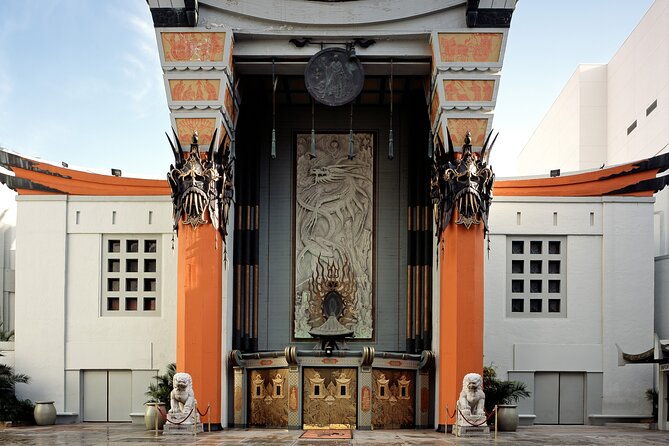
Then you’ll reach TCL Chinese Theatre for a more guided experience (about 15 minutes). This is one of the tour’s anchor points, and the reason is simple: it’s where Hollywood turned celebrity tributes into a public ritual.
You’ll learn about the theater’s 1927 grand opening and the start of the tradition of handprints and footprints pressed into cement. When you’re standing there, it makes sense why the marks became so iconic. They turn a star’s moment into a physical, walk-up encounter.
And because the tour includes examples like Marilyn Monroe, Harrison Ford, and R2-D2, you’re not just looking at random impressions. You’re connecting names to the wider Hollywood pop-culture map.
Practical photo tip: try a couple angles. One close shot for the texture, and one wider shot that includes the theater façade. Your close shot captures the “moment,” while the wider shot shows you where it sits in the Hollywood scene.
Hollywood Roosevelt Hotel: Spanish Colonial Revival glamour and Oscars history
The tour ends at The Hollywood Roosevelt. This is a smart closer because it gives you a sense of atmosphere after all the outdoor signage and sidewalks.
The Roosevelt is Spanish Colonial Revival, and it’s tied to a key milestone in Hollywood’s entertainment story: it hosted Hollywood’s first Academy Awards ceremony. You’ll also hear that the hotel was home to stars like Marilyn Monroe.
Why this matters for you: after collecting a list of landmarks (Sign, stars, theaters), you get one big piece of “so what.” The hotel represents how Hollywood glamour became a full ecosystem—events, guests, and venues that turned celebrity culture into a lifestyle.
The tour includes guided time, around 10 minutes, so it’s not just a photo stop. You’ll get enough context to appreciate what makes this building more than scenery.
Musso & Frank Grill: food history that shaped Hollywood’s myth
Along the route, you’ll get Hollywood storytelling that includes classic spots like Musso & Frank Grill, described as Hollywood’s oldest restaurant. The tour frames it as a place frequented by major names such as Chaplin, Bogart, and Marilyn Monroe.
The story gets even more specific with the mention of fettuccine Alfredo and how it first reached the U.S., connected to Mary Pickford and Douglas Fairbanks. That kind of detail is valuable because it connects Hollywood glamour to everyday culture: restaurants, meals, and the behind-the-scenes social world where stories spread.
Important note for expectations: the tour data emphasizes this as a highlighted story tied to Hollywood’s legacy. If your priority is only ticket-style sightseeing, keep your expectations grounded. If you like anecdotes and cultural connections, this section is a strong reason to take the tour instead of doing the landmarks solo.
Price and time: does $35 feel like value?
At $35 per person for 150 minutes, this tour is priced for a practical goal: see several top Hollywood icons with an expert guide and get context you’d struggle to collect on your own while walking.
Here’s why the price can feel fair:
- You cover multiple landmark areas in a single stretch: Hollywood Sign viewpoints, Walk of Fame, and movie palaces like Grauman’s Egyptian and TCL Chinese Theatre, plus the Roosevelt Hotel.
- You get guided explanations in a short window, which matters in Hollywood where you can burn time just figuring out what’s where.
- The group is described as intimate, which increases your chance to ask questions and not get lost in a crowd.
A consideration: if you have unlimited time and love wandering without structure, you could replicate parts of this route independently. But you’d miss the specific facts that help the stops click—like Hollywoodland’s origin and the 1960 Walk of Fame framework, plus the cement-handprint tradition and its significance.
In other words, you’re paying for interpretation, not just for walking.
Guides matter: Éloi’s humor and Mark’s behind-the-scenes angle
One of the biggest strengths of this tour is the guide style. In recent experiences, guides like Éloi were praised for humor and strong knowledge of Hollywood stories. Another guide, Mark, was noted for working in the film industry, which can translate into extra operational detail about movie theaters and what goes on behind the scenes.
That difference is real. If you want stories that feel like a friend talking shop, a guide with humor (like Éloi) can make the short 10–20 minute stops feel fun. If you’re the type who wonders how the industry actually works, a guide with film-industry experience (like Mark) can add depth to the theater-palace angle.
There’s also evidence the guide adapts when group needs get complicated, such as when age ranges and language expectations vary. That’s not something you can guarantee on every tour, but it’s a comfort here.
So, who is this walking tour best for?
This experience makes the most sense if you:
- want a fast, guided introduction to Hollywood Boulevard and its iconic theaters
- like movie history facts mixed with real-world sightseeing
- enjoy structured time blocks rather than wandering all day
- are traveling with limited time and want the biggest touchpoints covered in 2.5 hours
It’s less ideal if you:
- don’t like walking for 150 minutes straight through active tourist zones
- need frequent long breaks (this is still a walking itinerary)
- prefer only one neighborhood and don’t want a packed route
If you’re aiming for the classic Hollywood highlight reel with context, this tour is a solid match.
Should you book Historic Hollywood Boulevard and Movie Palaces?
I’d book it if you want Hollywood’s top icons in one coherent route, with guide explanations that turn landmarks into stories you can remember. The combination of the Hollywood Sign start, the Walk of Fame framework, and the handprints-and-footprints experience at TCL Chinese Theatre gives you more meaning than a self-guided photo run.
I might skip it if you’re already planning to spend the day exactly like a checklist collector, or if the idea of walking for 150 minutes in a high-traffic area doesn’t sound fun.
If you can do the walking, this tour is one of the simplest ways to get Hollywood’s major beats in a small amount of time—without feeling lost or stuck only taking pictures.
FAQ
What is the meeting point for the tour?
You meet in front of the elevator at the entrance of the Metro Station Hollywood/Highland on Hollywood Boulevard.
How long is the Historic Hollywood Boulevard and Movie Palaces Walking Tour?
The tour lasts about 150 minutes (2.5 hours).
How much does it cost per person?
The price is $35 per person.
What languages are the guided tours offered in?
The live tour guide is available in English and French.
What should I wear or bring?
Wear comfortable shoes, check the weather forecast, and bring a camera.
What are the main sights on the route?
You’ll see major Hollywood landmarks including the Hollywood Sign, Hollywood Walk of Fame, Grauman’s Egyptian Theatre, Dolby Theatre, TCL Chinese Theatre, and the Hollywood Roosevelt.
Is it easy to change plans if needed?
The tour offers free cancellation up to 24 hours in advance for a full refund, and you can reserve now and pay later.