REVIEW · LOS ANGELES
Historic Hollywood Boulevard and Movie Palaces Walking Tour
Book on Viator →Bookable on Viator
Hollywood tells stories best on foot. This walk leans hard into Hollywood Sign history and the star power of movie-palace stops, all tied together with clear, human guide talk. The one real catch: it depends on good weather, since you’ll be outside for most of the 2.5 hours.
I like that it’s small—up to 15 people—so the guide can keep things moving without turning into a noisy photo stampede. I also like the way the sights stack like scenes: Sign, Walk of Fame viewpoints, then straight into major theaters and Hollywood landmarks.
One more thought before you go: if you hate walking or crowds, this is still a downtown Hollywood-style route. It’s not long distance, but it is dense, and you’ll want comfortable shoes and patience.
In This Review
- Key highlights
- A Hollywood Boulevard walk that moves like a movie timeline
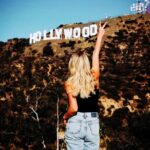
- Ovation Hollywood and the Hollywood Sign: the icon’s comeback story
- From Walk of Fame views to a changing boulevard
- Las Palmas Hotel and the Pretty Woman filming connection
- Egyptian Theatre: Hollywood’s first movie palace vibe
- El Capitan Theatre: Disney premieres and a Citizen Kane milestone
- Jimmy Kimmel Live! at the Hollywood Masonic Temple
- Grauman’s Chinese Theatre: the handprints and the star imprints
- Dolby Theatre and the Oscars red carpet moment
- Hollywood Roosevelt: the oldest operating hotel with first Oscars ties
- Price and pace: is $30 a good deal for a 2.5-hour walk?
- Should you book this Hollywood Boulevard walking tour?
- FAQ
- How long is the Historic Hollywood Boulevard and Movie Palaces Walking Tour?
- What is the price per person?
- Where does the tour start?
- How many travelers are on the tour?
- Is the tour offered in English?
- Are admission tickets included for the stops?
- What ticket format do I receive?
- Is there free cancellation?
- What if the weather is poor?
Key highlights
- Ovation Hollywood + the Hollywood Sign story including how the 1923 Hollywoodland ad became an icon
- Walk of Fame viewpoint connections from the Ovation Mall rooftop, plus how the boulevard evolved from the 1890s to the 1920s
- Pretty Woman filming stop at Las Palmas Hotel with local legends that give context to the façade
- Movie-palace interior time at the Egyptian Theatre and El Capitan Theatre, plus star-stage energy at Grauman’s Chinese and Dolby
- Real Oscars-area details with a walk connected to the Dolby Theatre red carpet
- Oldest operating Hollywood hotel moments at the Hollywood Roosevelt, tied to early Oscars and Marilyn Monroe
A Hollywood Boulevard walk that moves like a movie timeline
This tour works because it doesn’t just point. It connects. You start with the Hollywood Sign—then the route gradually explains why Hollywood became Hollywood in the first place. By the time you reach the big theaters, you’re not seeing random buildings. You’re watching a timeline play out.
The guide style seems to matter a lot here. People come away talking about how guide Marc (and also Mark from Belgium on the French side) kept the tone friendly and down to earth, with info delivered in a way that still felt fun. That matters in Hollywood, where it’s easy for tours to turn into a list of plaques.
You can also read our reviews of more walking tours in Los Angeles

Ovation Hollywood and the Hollywood Sign: the icon’s comeback story
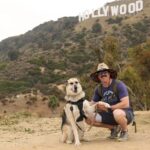
You begin at Ovation Hollywood, right where the Hollywood Sign works its magic from a distance. You get a quick orientation, then the guide puts the sign in context: it was originally an ad for Hollywoodland back in 1923. That detail sounds simple, but it turns the sign from a postcard into a real piece of Hollywood problem-solving.
You’ll also hear the story of how the sign survived and changed over time—plus the names tied to the rescue effort. Alice Cooper and Hugh Hefner come up as part of the “celebrities who saved it” arc. It’s a surprisingly human way to look at an icon that many people treat like it’s always been there.
Then you move to the Hollywood Sign stop itself. Expect a shorter stop here, but it’s the moment where you reset your bearings and get your best photos before the walk gets crowded later near the theaters.
Practical tip: bring lens cloth or just keep an eye on smudges. Hollywood skies can look dramatic, but glare is real around sign-time.
From Walk of Fame views to a changing boulevard
After the sign, the tour shifts into boulevard storytelling. At the Hollywood Walk of Fame, you get sweeping views from the Ovation Mall rooftop. That matters because the Walk of Fame can feel busy and flat at street level. From up high, you understand the street layout and why the area grew the way it did.
This is also where the guide explains how Hollywood Boulevard evolved from Prospect Avenue in the 1890s into the core of LA’s Theater District by the 1920s. And it doesn’t stop at “growth.” You’ll hear about the cycle of boom, bust, and revival across decades—basically the reason the same block can feel like it’s been reinventing itself for a century.
There’s also a brief neighborhood moment where you’ll see a grand Art Deco structure with Neo-Gothic details, described as a Hollywood relic. Even if you don’t memorize the architecture name, the guide helps you notice the blend of styles that made early Hollywood buildings feel theatrical before they ever hosted a premiere.
If you like city history but also like your stories tied to faces and film, this is one of the strongest segments of the walk.
Las Palmas Hotel and the Pretty Woman filming connection
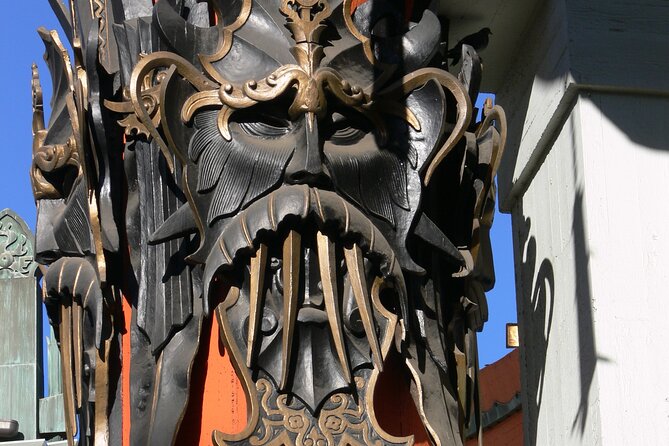
Next up is Las Palmas Hotel, tied to a familiar modern movie location—Pretty Woman. The tour doesn’t just say where filming happened. It gives you the kind of background that helps you imagine the building in the movie frame.
This stop is short, but it’s valuable because it links Hollywood’s image-making to a building that still looks like it belongs to the era it represents. You start to see how location and branding work together in LA. The hotel façade isn’t just a backdrop; it’s part of the story Hollywood tells about itself.
If you’re a film fan, this is also a nice momentum break before the tour turns fully into movie-palace mode.
Egyptian Theatre: Hollywood’s first movie palace vibe
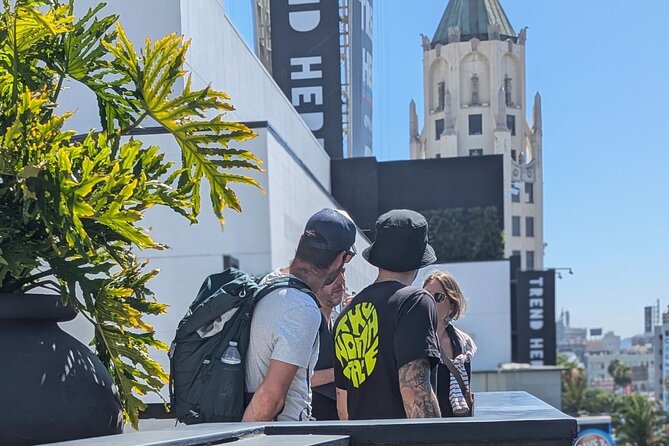
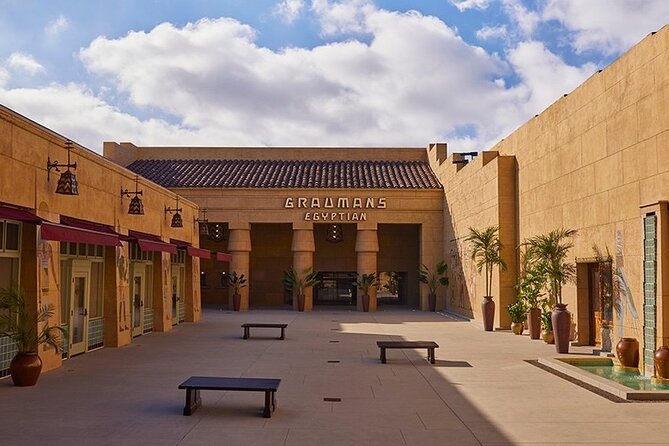
Then you step into a major turning point: the Egyptian Theatre. The guide frames it as Hollywood’s first movie palace, and that label is more than trivia. It signals a shift—moviegoing becoming a spectacle, not just a screening room.
The building’s design is where the stop gets fun. You’ll hear about the Egyptian Revival style and how it connects to the fascination sparked by King Tut’s discovery. That’s a perfect example of why themed architecture matters in Hollywood: it’s like advertising, but in bricks and details.
You get around 20 minutes at this stop, which gives you enough time to look closely instead of just snapping one photo and moving on. If you enjoy old-world theater aesthetics, this is one of the stops you’ll remember later when you think about Hollywood not just as brands, but as craft.
You can also read our reviews of more historical tours in Los Angeles




El Capitan Theatre: Disney premieres and a Citizen Kane milestone
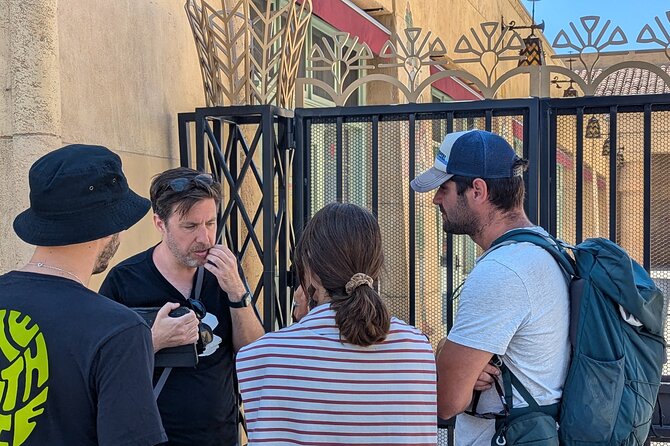
After the Egyptian Theatre, the walk heads to El Capitan Theatre. This one is known for Disney premieres, but the real hook for film buffs is the legendary Citizen Kane debut connection.
That contrast works well on a guided walk. You go from a classic Hollywood landmark tied to early cinematic prestige, then into a theater used for modern big-show releases. The guide helps you see the continuity: Hollywood theaters keep recycling their own glamour while the industry evolves.
With about 15 minutes here, you’ll have time to take in the theatre atmosphere and listen for how the guide ties the place to film history without turning it into a lecture.
Jimmy Kimmel Live! at the Hollywood Masonic Temple
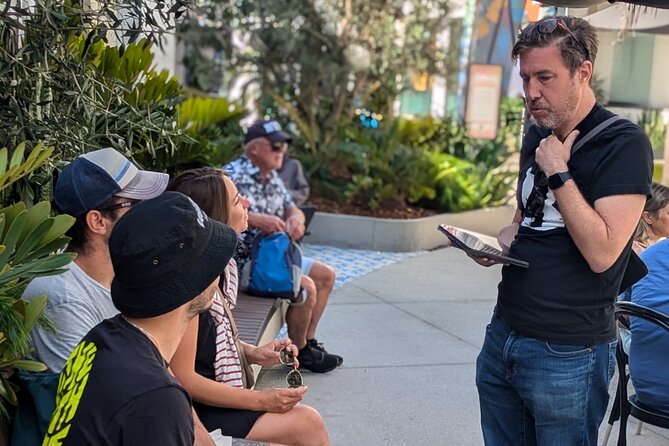
At Hollywood Masonic Temple (1921), the tour becomes a story about Hollywood’s social machinery. You’ll learn about the famous Masons of Hollywood—names and networks that helped shape the city’s public face and big-city connections.
This stop also helps you understand why old meeting halls and civic-looking buildings show up around major Hollywood landmarks. Hollywood wasn’t built only by studios. It was built by people who knew how to organize, network, and throw events.
Now, the temple is home to Jimmy Kimmel Live! That current-day use gives the stop an easy bridge: you get the past, then you get the fact that the building still matters in modern media.
Grauman’s Chinese Theatre: the handprints and the star imprints
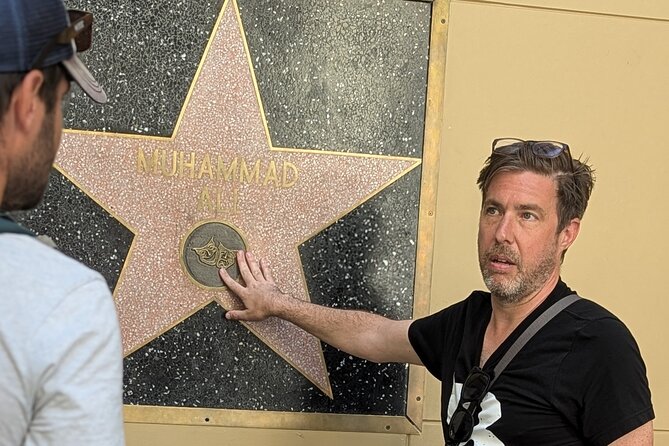
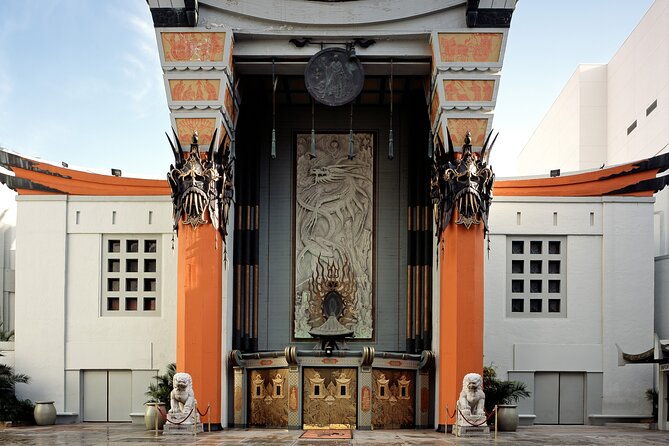
Then it’s iconic time at TCL Chinese Theatres, originally Grauman’s Chinese Theatre (1927). This stop runs about 15 minutes, and it’s designed for that Hollywood feeling of standing where history left marks.
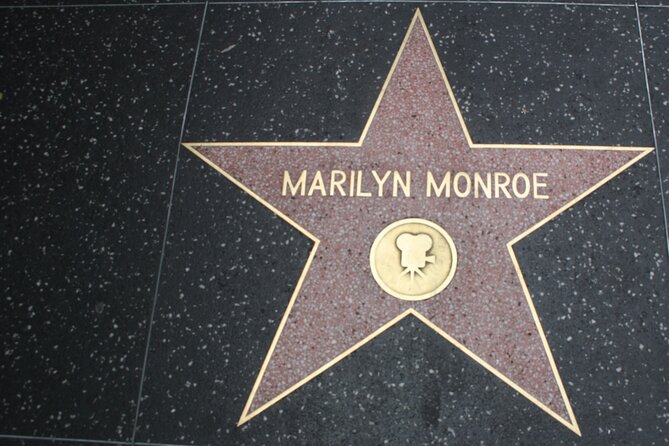
The best part here is the handprint tradition. You get to see the imprints left by icons—names mentioned include Marilyn Monroe through Harrison Ford. Even if you know only one or two names on sight, the guide helps you see how the tradition works as a public ritual.
This is also a good stop for photos, but don’t do the mistake of spending all your time trying to pose without listening. The guide’s context makes the handprints feel less like random souvenirs and more like a living museum that spills onto the sidewalk.
Dolby Theatre and the Oscars red carpet moment
At Dolby Theatre, you get a Hollywood Boulevard peak experience: the guide points you toward the Oscars red carpet connection and the role of the Academy Awards.
This part is about atmosphere. You’re not only looking at another landmark. You’re walking the part of LA that becomes worldwide news during awards season, which makes the whole street feel louder in your head—even if it’s just a normal afternoon.
Expect about 20 minutes here, which is just long enough to take in the theatre presence and understand why it’s become a global symbol for entertainment prestige.
Hollywood Roosevelt: the oldest operating hotel with first Oscars ties
Finish at The Hollywood Roosevelt, described as Hollywood’s oldest continuously operating hotel. This is where the tour gets extra “old LA” in a good way.
The guide ties the place to major classic-movie moments: Marilyn Monroe once lived here, and the first Oscars were held at the hotel. That combo is powerful because it explains how hotels, glamour, and awards season grew together. The building isn’t only a background. It helped host the events that turned fame into a formal industry.
You’ll have around 10 minutes at the stop. It’s not a long linger, but it’s a strong closing beat—especially if you want your final image to be something you can picture: old hotel lights, red-carpet energy, and the early days of awards glamour.
Price and pace: is $30 a good deal for a 2.5-hour walk?
At $30 per person for about 2 hours 30 minutes, this is one of those smart-value tours that gives you a lot of big-name stops without the ticket-sticker shock. The price works best if you enjoy two things: (1) guided storytelling that connects locations across decades, and (2) seeing theaters as more than just exteriors.
A big value signal here is that marked stops are admission ticket free. That means your time inside key locations likely counts, not just the quick exterior pass. When you’re paying only $30, you want the walk to feel like you’re getting access, not only information.
The pace is also reasonable: you’re not rushing through all the highlights at breakneck speed, but you will be outside for extended stretches. The tour caps at 15 travelers, so it stays manageable rather than feeling like a moving wall of phones.
If you’re visiting during peak season, booking earlier helps. The tour is often booked around 32 days in advance on average, which tells you this is a popular “starter Hollywood” walk.
Quick practical notes:
- Wear shoes you can walk in for an LA boulevard day.
- Bring a light layer; weather can change quickly.
- If you’re prone to getting bored by facts, trust the guide tone. The best versions of this tour are guided in a way that keeps it fun, not stiff.
Should you book this Hollywood Boulevard walking tour?
Book it if you want a small-group Hollywood Sign to movie-palace storyline that feels like a sequence of scenes. It’s ideal for film fans who care about buildings, not just billboards. It’s also a good fit if you want a first-time LA orientation that doesn’t stop at generic “famous spots.”
Skip it if you’re sensitive to weather, dislike outdoor walking, or want a slow museum-style pace. This is a guided walk built for seeing a lot without wasting time.
One more reason I’d lean toward booking: the guide experience seems to be a real strength here. Names like Mark from Belgium and Marc show up with feedback about being prepared, down to earth, and able to make details land without killing the mood. For a $30 tour, that kind of guide craft is what turns sightseeing into something you actually remember.
FAQ
How long is the Historic Hollywood Boulevard and Movie Palaces Walking Tour?
It runs about 2 hours 30 minutes.
What is the price per person?
The price is $30.00 per person.
Where does the tour start?
It starts at 6815 Hollywood Blvd, Los Angeles, CA 90028, USA.
How many travelers are on the tour?
The tour has a maximum of 15 travelers.
Is the tour offered in English?
Yes, it’s offered in English.
Are admission tickets included for the stops?
The tour notes that admission tickets are free for the stops listed during the experience.
What ticket format do I receive?
You get a mobile ticket.
Is there free cancellation?
Yes. You can cancel for a full refund up to 24 hours in advance.
What if the weather is poor?
The experience requires good weather. If it’s canceled due to poor weather, you’ll be offered a different date or a full refund.